What Is Cybersecurity? The Complete Guide for Businesses

Cybersecurity is the practice of protecting computer systems, networks, and data from digital attacks, unauthorized access, and damage. It encompasses the technologies, processes, and practices designed to safeguard everything from individual laptops to enterprise cloud infrastructure.
In simple words: cybersecurity is how businesses and individuals defend their digital assets from hackers, malware, and data breaches.
With cyberattacks costing businesses an average of $4.88 million per breach in 2024 (IBM Cost of a Data Breach Report), understanding cybersecurity is no longer optional for any organization. This guide breaks down what cybersecurity means in 2026, the different types, the most common threats, and what businesses actually need to do about it.
Cybersecurity in Simple Words
Think of cybersecurity like the security system for a building. The building is your business network. Cybersecurity includes:
- Locks on the doors: Firewalls that block unauthorized traffic from entering your network.
- Security cameras: Monitoring tools (SIEM, EDR) that watch for suspicious activity 24/7.
- Guard at the entrance: Multi-factor authentication that verifies someone is who they claim to be.
- Alarm system: Intrusion detection systems that alert your team when something abnormal happens.
- Safe for valuables: Encryption that protects sensitive data even if someone breaks in.
- Emergency plan: Incident response procedures that guide your team when an attack occurs.
Every layer adds protection. No single measure is enough on its own, which is why cybersecurity professionals use a "defense in depth" approach with multiple overlapping controls.
The 7 Types of Cybersecurity
Cybersecurity is not a single discipline. It spans seven distinct domains, each protecting a different aspect of an organization's technology stack.
1. Network Security
Protects the infrastructure that connects your devices and systems. Network security controls include firewalls, intrusion prevention systems (IPS), network segmentation, VPNs, and secure Wi-Fi configurations.
Real-world example: A firewall rule that blocks all inbound traffic on port 3389 (Remote Desktop Protocol) prevents attackers from brute-forcing RDP credentials, one of the top initial access vectors for ransomware.
2. Cloud Security
Secures data, applications, and infrastructure hosted in cloud platforms like AWS, Azure, and Google Cloud. Cloud security includes identity and access management (IAM), encryption, security group configuration, and cloud security posture management (CSPM).
Key challenge: Misconfigured cloud storage buckets (S3, Azure Blob) remain one of the most common causes of data exposure. Over 35% of organizations had at least one misconfigured cloud asset in 2025.
3. Endpoint Security
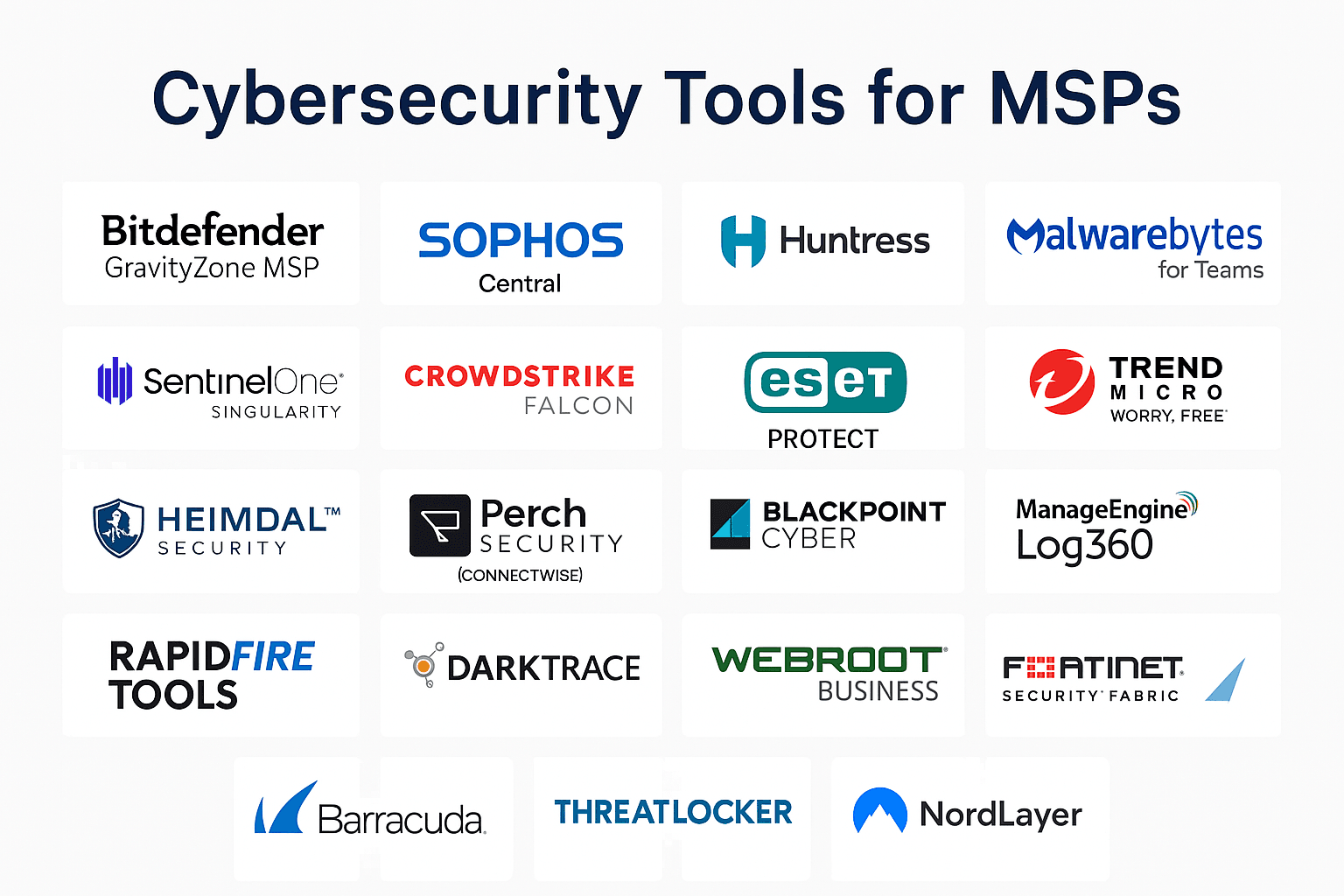
Protects individual devices (laptops, desktops, servers, mobile phones) that connect to your network. Modern endpoint security goes beyond traditional antivirus to include Endpoint Detection and Response (EDR) tools like CrowdStrike, SentinelOne, and Microsoft Defender for Endpoint.
Why it matters: With remote work now standard, endpoints are often outside the corporate network perimeter, making them the primary attack surface.
4. Application Security
Focuses on finding and fixing vulnerabilities in software applications before attackers exploit them. This includes secure coding practices, code reviews, penetration testing, Web Application Firewalls (WAFs), and runtime application self-protection (RASP).
Common vulnerabilities: The OWASP Top 10 (SQL injection, cross-site scripting, broken authentication) guides application security priorities across the industry.
5. Identity and Access Management (IAM)
Controls who has access to what within your organization. IAM encompasses multi-factor authentication (MFA), single sign-on (SSO), role-based access control (RBAC), privileged access management (PAM), and zero-trust architecture.
Critical stat: Compromised credentials are the #1 initial attack vector, responsible for 16% of all breaches (IBM, 2024). MFA alone blocks 99.9% of automated credential attacks.
6. Data Security
Protects sensitive information throughout its lifecycle, whether at rest (stored), in transit (moving across networks), or in use (being processed). Data security tools include encryption, data loss prevention (DLP), database activity monitoring, and data classification.
Compliance driver: Regulations like GDPR, HIPAA, PCI DSS, and SOC 2 all have specific requirements for how data must be protected, stored, and accessed.
7. Disaster Recovery and Business Continuity
Ensures your business can recover from a cyberattack or system failure. This domain covers backup strategies, disaster recovery plans, business continuity planning, and incident response procedures.
The 3-2-1 rule: Keep 3 copies of your data, on 2 different media types, with 1 copy stored offsite. This simple rule survives even ransomware attacks that encrypt your primary systems.
Most Common Cybersecurity Threats in 2026
Understanding what you are defending against is half the battle. Here are the threats that businesses face most frequently in 2026.
Ransomware
Ransomware encrypts your files and demands payment (usually in cryptocurrency) for the decryption key. In 2025, the average ransom demand reached $2.73 million, with total recovery costs averaging $4.54 million per incident (Sophos State of Ransomware 2025).
How it gets in: Phishing emails (67%), exploited vulnerabilities in public-facing applications (20%), and compromised RDP credentials (13%).
Phishing and Social Engineering
Phishing attacks trick users into clicking malicious links, downloading malware, or revealing credentials. Business Email Compromise (BEC) attacks, where criminals impersonate executives to request wire transfers, caused $2.9 billion in losses in 2024 according to the FBI IC3 report.
Evolution in 2026: AI-generated phishing emails are now nearly indistinguishable from legitimate messages, making traditional "spot the phishing" training less effective and technical controls more critical.
Insider Threats
Not all threats come from outside. Disgruntled employees, careless workers, and compromised accounts within your organization cause 25% of data breaches. Insider threats are harder to detect because the attacker already has legitimate access.
Supply Chain Attacks
Attackers compromise a trusted vendor or software provider to gain access to their customers. The SolarWinds attack (2020) and MOVEit breach (2023) showed that even organizations with strong security can be compromised through their supply chain.
Zero-Day Exploits
Vulnerabilities in software that the vendor does not know about and therefore has not patched. Zero-days are valuable and dangerous because there is no defense other than defense-in-depth strategies and anomaly detection.
Credential Stuffing and Brute Force
Automated attacks that try thousands of username/password combinations against your login pages. With billions of stolen credentials available on the dark web, any account without MFA is at risk.
Why Cybersecurity Matters for SMBs
A dangerous myth persists: "We are too small to be targeted." The data says otherwise:
- 43% of cyberattacks target small businesses (Verizon Data Breach Investigations Report 2025)
- 60% of small businesses that suffer a significant cyberattack go out of business within 6 months
- The average cost of a data breach for organizations with fewer than 500 employees is $3.31 million
- Cyber insurance premiums have increased 50-100% since 2022, and insurers now require proof of MFA, EDR, and security monitoring before issuing policies
SMBs are actually preferred targets because they typically have weaker defenses, fewer security staff, and valuable data (client records, financial information, intellectual property).
Building a Cybersecurity Program: Where to Start
For businesses that do not yet have a formal cybersecurity program, the NIST Cybersecurity Framework provides a structured approach organized into five functions.
1. Identify
Know what you need to protect. Inventory your hardware, software, data, and users. You cannot secure what you do not know exists.
- Create an asset inventory (all devices, cloud services, SaaS apps)
- Classify data by sensitivity (public, internal, confidential, restricted)
- Identify your most critical business processes and the systems that support them
2. Protect
Implement safeguards to ensure delivery of critical services.
- Deploy MFA on all user accounts (Microsoft 365, VPN, cloud admin portals)
- Implement endpoint protection (EDR, not just antivirus)
- Configure firewalls and network segmentation
- Enable email filtering and anti-phishing controls
- Establish least-privilege access policies
- Train employees on security awareness quarterly
3. Detect
Implement capabilities to identify when a security event occurs.
- Deploy SIEM for centralized log collection and alert correlation
- Enable 24/7 security monitoring (in-house SOC or outsourced)
- Configure alerting for critical events (failed logins, privilege escalation, data exfiltration)
4. Respond
Have a plan for when (not if) an incident occurs.
- Create a documented incident response plan with clear roles and escalation paths
- Conduct tabletop exercises quarterly to practice the plan
- Establish communication templates for notifying customers and regulators
- Maintain relationships with legal counsel and forensic investigators before you need them
5. Recover
Ensure you can restore normal operations after an incident.
- Maintain tested backups following the 3-2-1 rule
- Document recovery procedures for all critical systems
- Define Recovery Time Objectives (RTO) and Recovery Point Objectives (RPO)
- Conduct post-incident reviews to improve defenses
Cybersecurity for MSPs: The Business Opportunity
For managed service providers, cybersecurity is both a responsibility and a growth engine. Every MSP client needs security services, and the ones who do not provide them risk losing clients to competitors who do.
The challenge is execution. Building a full cybersecurity practice requires:
- 24/7 SOC monitoring: Minimum 5-6 security analysts for round-the-clock coverage
- SIEM platform: $50,000-$200,000+ annually for enterprise-grade tools
- EDR deployment: Endpoint protection across all client environments
- Incident response capability: Trained responders available for critical events
- Compliance expertise: HIPAA, PCI DSS, SOC 2, CMMC knowledge
This is a $500,000+ annual investment that most MSPs cannot justify independently. The alternative that our 32+ MSP partners use is white-label SOC-as-a-Service, which provides all of these capabilities under the MSP's own brand at a fraction of the cost.
Is Cybersecurity a Good Career?
Cybersecurity is one of the strongest career paths in technology today:
- 0% unemployment rate in cybersecurity (Cybersecurity Ventures)
- 3.4 million unfilled positions globally (ISC2 Workforce Study 2025)
- Entry-level salaries start at $55,000-$80,000 for SOC analysts
- Senior roles (CISO, Security Architect) command $150,000-$300,000+
- Growth rate: The Bureau of Labor Statistics projects 32% job growth for information security analysts through 2032, far outpacing the average for all occupations
The most in-demand cybersecurity roles in 2026 include SOC analysts, cloud security engineers, incident responders, penetration testers, and security architects.
Cybersecurity Frameworks and Standards
Several frameworks guide how organizations implement cybersecurity programs:
| Framework | Best For | Key Focus |
|---|---|---|
| NIST CSF | All organizations | Risk-based approach across 5 functions (Identify, Protect, Detect, Respond, Recover) |
| ISO 27001 | International businesses | Information security management system (ISMS) certification |
| CIS Controls | SMBs and MSPs | Prioritized list of 18 security controls ranked by impact |
| SOC 2 | SaaS and service providers | Trust service criteria (security, availability, processing integrity, confidentiality, privacy) |
| HIPAA | Healthcare organizations | Protected health information (PHI) security requirements |
| PCI DSS | Organizations handling card data | Payment card data protection requirements |
| CMMC | Defense contractors | Controlled Unclassified Information (CUI) protection for DoD supply chain |
Frequently Asked Questions
What is cybersecurity in simple words?
Cybersecurity is the practice of protecting computers, networks, and data from unauthorized access, attacks, and damage. It includes technologies like firewalls and encryption, processes like incident response plans, and practices like multi-factor authentication and employee security training. Think of it as the complete security system for your digital world.
What are the 7 types of cybersecurity?
The seven types of cybersecurity are: (1) Network Security — protecting network infrastructure, (2) Cloud Security — securing cloud-hosted assets, (3) Endpoint Security — protecting individual devices, (4) Application Security — securing software from vulnerabilities, (5) Identity and Access Management — controlling who accesses what, (6) Data Security — protecting sensitive information, and (7) Disaster Recovery and Business Continuity — ensuring recovery from incidents.
Is cybersecurity a good career?
Yes. Cybersecurity has a 0% unemployment rate, 3.4 million unfilled positions globally, and starting salaries of $55,000-$80,000 for entry-level SOC analysts. Senior roles like CISO earn $150,000-$300,000+. The BLS projects 32% job growth through 2032, making it one of the fastest-growing fields in technology.
Is cyber security a high salary?
Cybersecurity consistently pays above-average IT salaries. Entry-level analysts earn $55,000-$80,000, mid-level professionals earn $90,000-$130,000, and senior roles command $130,000-$200,000+. CISOs at large enterprises can earn $250,000-$500,000+ in total compensation. The persistent talent shortage keeps salaries growing 8-10% annually.
Can I make $200,000 a year in cyber security?
Yes, $200,000 is achievable at the senior level. Security architects, principal security engineers, and SOC directors at mid-to-large enterprises regularly earn $180,000-$250,000. CISOs and VP-level security executives earn significantly more. Certifications like CISSP, OSCP, and specialized cloud security credentials accelerate earning potential.
Key Takeaways
- Cybersecurity protects systems, networks, and data from digital attacks using a defense-in-depth approach across 7 domains.
- Ransomware, phishing, and credential attacks are the top threats businesses face in 2026.
- 43% of cyberattacks target small businesses — "too small to be targeted" is a myth.
- The NIST Cybersecurity Framework (Identify, Protect, Detect, Respond, Recover) provides a structured approach for any organization.
- MSPs can deliver enterprise-grade security through white-label SOC services without building a $500K+ in-house operation.
- Cybersecurity is one of the strongest career paths with 0% unemployment and $55K-$300K+ salary range.
Protect Your Clients with White-Label Cybersecurity
Medha Cloud provides 24/7 SOC monitoring, SIEM, and incident response as a white-label service for MSPs. Certified analysts, your brand, enterprise-grade protection.
Protect your organization with expert healthcare IT support designed for HIPAA compliance.
Secure Healthcare IT ManagementTopics
Sreenivasa Reddy G
Founder & CEO • 15+ years
Sreenivasa Reddy is the Founder and CEO of Medha Cloud, recognized as "Startup of the Year 2024" by The CEO Magazine. With over 15 years of experience in cloud infrastructure and IT services, he leads the company's vision to deliver enterprise-grade cloud solutions to businesses worldwide.