
Data Center Statistics 2026: Spending, Growth & Global Capacity
The data center industry is in the middle of the largest buildout in its history. AI workloads are consuming power and compute at rates nobody projected even two years ago, hyperscalers are spending $75-135 billion each on infrastructure, and total data center spending will exceed $650 billion in 2026. This page compiles 40+ verified statistics on data center capacity, spending, growth projections, and the AI-driven infrastructure boom reshaping the industry.
Global Data Center Spending
Data center spending in 2026 represents a historic peak, driven primarily by AI training and inference infrastructure. As the cloud computing statistics show, overall cloud infrastructure spending is accelerating alongside this data center buildout. The numbers dwarf anything the industry has seen before.
| Spending Metric | Value | Source |
|---|---|---|
| Total data center spending (2026) | $650+ billion | Synergy Research Group |
| YoY increase in data center spending | 31.7% | Synergy Research |
| Planned investment in data centers by 2030 | $7 trillion | McKinsey / Industry Consensus |
| Global IT spending (2026, all categories) | $6.15 trillion | Gartner |
| Global IT spending growth rate (2026) | 10.8% | Gartner |
| Semiconductor industry annual sales (2026) | $975 billion (historic peak) | SEMI / SIA |
| Data center construction spending (new builds, 2026) | $128 billion | JLL Research |
For a closer look at the environmental cost of this buildout, see our report on the top 100 data centers and their environmental impact. The $7 trillion figure for planned investment by 2030 includes new facility construction, equipment upgrades, power infrastructure, and land acquisition. To put that in perspective, it's roughly equivalent to the GDP of France and Germany combined. This isn't gradual growth — it's a generational infrastructure buildout comparable to the highway system or the original internet backbone.
Global Data Center Capacity and Footprint
| Capacity Metric | Value |
|---|---|
| Total data centers globally | 11,038 |
| Countries with data centers | 174 |
| Data centers in the United States | 4,011 (as of March 2026) |
| US share of global data center capacity | ~36% |
| Total global data center power capacity | 49 GW (operational) |
| Under-construction data center capacity | 22 GW |
| Planned (not yet under construction) capacity | 41 GW |
| Global colocation market size (2026) | $78.4 billion |
| Colocation market growth rate | 14.2% CAGR |
The US dominates with 4,011 data centers — more than the next five countries combined. Northern Virginia alone hosts more data center capacity than most countries. But the growth is global: Southeast Asia, the Middle East, and Latin America are all seeing record data center construction as hyperscalers expand to serve local markets and meet data sovereignty requirements.
Hyperscaler Capital Expenditure (2026)
The biggest spenders in data center infrastructure are the hyperscale cloud providers and large tech companies building AI training clusters. Data center systems represent 16.5% growth in the 2026 IT spending breakdown — the fastest-growing hardware category.
| Company | 2026 Capex (Announced/Projected) | Primary Focus |
|---|---|---|
| Meta | $115–135 billion | AI training infrastructure, Llama model clusters |
| Microsoft | $80 billion | Azure data centers, OpenAI partnership |
| Amazon (AWS) | $75+ billion | AWS regions, custom silicon (Graviton, Trainium) |
| Alphabet (Google) | $75 billion | GCP expansion, TPU infrastructure, Gemini |
| Oracle | $8–10 billion (redirected from layoff savings) | OCI cloud regions, AI GPU clusters |
| Apple | $500 billion (5-year commitment, US) | Apple Intelligence, private cloud compute |
2026 Hyperscaler Capital Expenditure
Meta's $115-135 billion capex figure is staggering — it's more than the GDP of 130+ countries. The company is building massive AI training clusters specifically for Llama model development, and the spending reflects the enormous compute requirements of training frontier AI models. Oracle's approach is different: redirecting savings from a 30,000-person layoff into cloud infrastructure, essentially trading headcount for GPU capacity.
Power and Energy Consumption
Data center energy consumption is the industry's most pressing challenge. AI workloads consume 5-10x more power per rack than traditional cloud computing.
| Energy Metric | Value |
|---|---|
| Global data center electricity consumption (2026) | ~1,000 TWh |
| % of global electricity used by data centers | 3.5–4% |
| Power demand from AI workloads specifically | 200+ TWh |
| Average PUE (power usage effectiveness) globally | 1.55 |
| Average PUE for hyperscale facilities | 1.1–1.2 |
| Power per rack (AI training) | 40–100 kW |
| Power per rack (traditional compute) | 6–10 kW |
| Data centers using liquid cooling (2026) | 28% (up from 8% in 2023) |
| Hyperscalers with nuclear power agreements | Microsoft, Amazon, Google, Oracle |
Global Data Center Power Capacity
The power challenge is real. AI training racks pulling 40-100 kW each — versus the 6-10 kW of a traditional compute rack — means that data centers built five years ago don't have the power density to run AI workloads. This is driving a wave of retrofits and new construction specifically designed for high-density AI compute. It's also why every major hyperscaler is now signing nuclear power agreements — they need baseload power that renewables alone can't deliver at the required scale.
Edge Computing and Distributed Infrastructure
| Edge Computing Metric | Value |
|---|---|
| Edge computing market size (2026) | $232 billion |
| Edge computing CAGR | 17.8% |
| Enterprises deploying edge infrastructure | 42% |
| Data processed at the edge (vs cloud/core) | 30% of enterprise data |
Edge computing is growing alongside centralized data centers, not replacing them. Remote work has accelerated edge adoption as organizations need to serve distributed workforces with low-latency applications. AI inference — running trained models against new data — is increasingly moving to the edge, while training stays in centralized hyperscale facilities.
What This Means for Businesses
For businesses that don't build their own data centers (which is most of them), these trends affect infrastructure decisions in concrete ways:
- Colocation costs are rising. With demand outpacing supply, colocation prices in Tier 1 markets (Northern Virginia, Dallas, Phoenix) have increased 15-25% since 2024. Businesses renting cabinet space should expect continued price pressure.
- Cloud pricing will reflect infrastructure costs. When hyperscalers spend $75-135B on infrastructure, those costs eventually flow through to customers. Expect cloud compute prices to stabilize or increase slightly, particularly for GPU instances.
- Power availability constrains expansion. If your business is considering a new data center footprint, power availability — not real estate — is the limiting factor. Some markets have 2-3 year wait times for new utility connections.
- Managed hosting removes the infrastructure burden. For businesses running workloads that don't require hyperscale, managed hosting solutions provide enterprise-grade infrastructure without the capital commitment of building or leasing your own space.
- Specialty hosting for compliance requirements. Healthcare, financial services, and government organizations need infrastructure that meets specific compliance frameworks. Specialty hosting providers handle the compliance burden — HIPAA, SOC 2, FedRAMP — so you don't have to build it yourself.
Sources: Synergy Research Group Data Center Spending Tracker (Q1 2026), Gartner IT Spending Forecast (January 2026), IDC Worldwide Datacenter Forecast 2026, JLL Data Center Outlook 2026, SEMI World Fab Forecast, McKinsey Global Infrastructure Outlook, Uptime Institute Global Data Center Survey 2025, IEA Data Centres and Data Transmission Networks Report 2025, Cloudscene Global Data Center Database (March 2026).
Protect your organization with expert healthcare IT support designed for HIPAA compliance.
Healthcare Technology ServicesTopics
Sreenivasa Reddy G
Founder & CEO • 15+ years
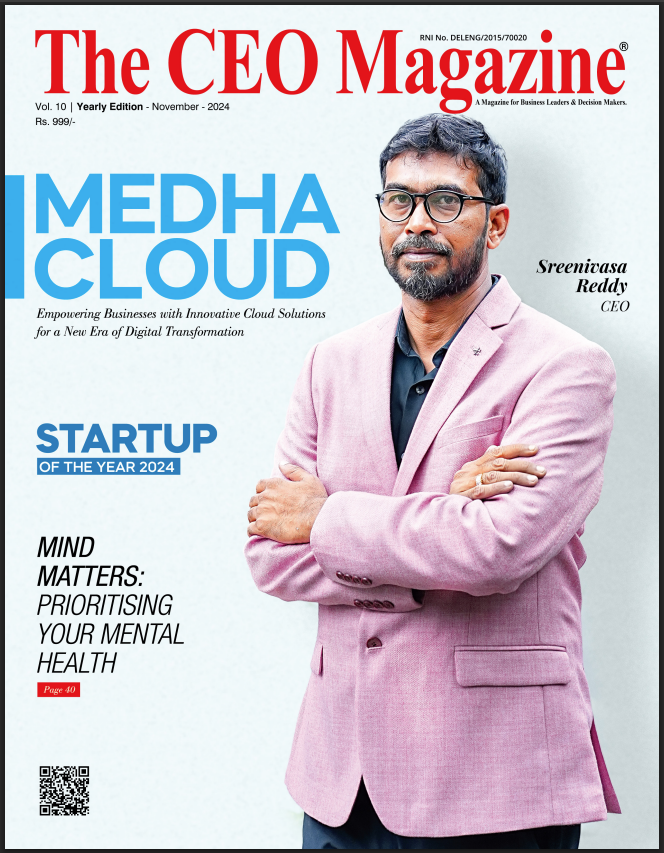
Sreenivasa Reddy is the Founder and CEO of Medha Cloud, recognized as "Startup of the Year 2024" by The CEO Magazine. With over 15 years of experience in cloud infrastructure and IT services, he leads the company's vision to deliver enterprise-grade cloud solutions to businesses worldwide.
More in Cloud Migrations
View all
Rocky Linux: Versions, RHEL Compatibility & Migration
9 min read
VMware to Hyper-V Migration: Step-by-Step Guide & Tools
11 min read
50 Cloud Migration Statistics for 2026 — Success & Failure Rates
17 min read
Top 100 Data Centers: Power, Water & Environmental Cost
18 min read
55 Cloud Computing Statistics for 2026: Spending, Migration & Adoption
16 min read
SaaS Statistics 2026: Market Size, Spending & AI Agent Trends
14 min read