
IT Spending Statistics 2026 — 55 Global Budget, Cloud & AI Trends
Global IT spending is projected to reach $5.61 trillion in 2026, an 9.8% increase over 2025. This page compiles 55 IT spending statistics covering enterprise budgets, cloud investment, security spend, SaaS costs, and regional breakdowns. Whether you're a CIO building next year's budget or an MSP pricing your services, these numbers provide the benchmarks you need.
Table of Contents
Global IT Spending Overview
IT spending continues to outpace GDP growth as digital transformation shifts from a strategic initiative to an operational requirement. At the small business level, the numbers look different — our SMB IT spending statistics detail how companies under 500 employees allocate their budgets. These figures capture the total addressable market across all IT categories.
| IT Spending Category | 2025 | 2026 (Projected) | Growth |
|---|---|---|---|
| Data Center Systems | $315B | $367B | +16.5% |
| Enterprise Software | $1.08T | $1.22T | +13.0% |
| Devices | $752B | $791B | +5.2% |
| IT Services | $1.57T | $1.71T | +8.9% |
| Communications Services | $1.41T | $1.48T | +5.0% |
| Total | $5.11T | $5.61T | +9.8% |
- $5.61 trillion — total worldwide IT spending projected for 2026, up from $5.11 trillion in 2025 (Gartner).
- Enterprise software is the fastest-growing segment at 13.0% YoY growth, driven by AI, analytics, and cloud-native applications.
- Data center spending growth of 16.5% is fueled by AI infrastructure buildout and GPU server demand — the AI adoption statistics for 2026 explain why enterprises are spending at this pace.
- IT spending as a percentage of revenue averages 5.7% across all industries in 2026 (Deloitte CIO Survey).
- 68% of CIOs expect their IT budgets to increase in 2026, while only 7% anticipate cuts.
Cloud Spending
Cloud infrastructure and services represent the single largest growth driver in IT budgets. Public cloud alone is approaching $700 billion in annual spending. Our cloud computing statistics for 2026 break down this spending by provider, service model, and region.
- $679 billion in public cloud services spending projected for 2026, up 20.4% from $564 billion in 2025 (Gartner).
- Cloud IaaS spending alone will reach $182 billion, with SaaS at $299 billion and PaaS at $198 billion.
- 94% of enterprises use at least one public cloud service, and 82% have a multi-cloud strategy.
- AWS leads with 31% IaaS market share, followed by Azure at 25% and Google Cloud at 12% (Synergy Research).
- Cloud spending now represents 12.1% of total IT budgets, up from 9.4% in 2023.
- 37% of cloud spending is classified as "waste" — unused or underprovisioned resources (Flexera State of the Cloud 2025).
- The average enterprise spends $3.8 million per year on public cloud services.
Cybersecurity Spending
Security budgets continue to grow faster than overall IT spending as threat complexity and regulatory requirements escalate.
- Global cybersecurity spending is projected to reach $215 billion in 2026, up from $188 billion in 2025 (Gartner).
- Security accounts for 3.8% of total IT budgets on average, up from 3.1% in 2022.
- Identity and access management (IAM) is the fastest-growing security category at +17.8% YoY.
- 62% of organizations increased their security budget following a breach or near-miss incident.
- The average CISO manages a budget of $28 million in organizations with 5,000+ employees.
- Managed security services spending reached $38 billion, as companies outsource SOC and SIEM operations.
SaaS & Software Spending
SaaS is now the default delivery model for enterprise software, but subscription sprawl and cost management have become critical IT challenges.
| SaaS Metric | 2026 Value | Source |
|---|---|---|
| Global SaaS revenue | $299 billion | Gartner |
| Average SaaS apps per company | 371 | Productiv |
| SaaS spend per employee/year | $4,830 | Zylo |
| Wasted SaaS licenses | 33% | Zylo |
| Companies with SaaS management platform | 41% | Flexera |
- $299 billion in global SaaS revenue in 2026, making it the largest software delivery category (Gartner).
- The average enterprise uses 371 SaaS applications — a 32% increase from 2023 (Productiv).
- SaaS spending per employee reaches $4,830 annually on average, with tech companies spending $7,200+ (Zylo).
- 33% of SaaS licenses go unused or underutilized, representing an average waste of $18 million per year in large enterprises.
- 78% of enterprises plan to consolidate SaaS vendors in 2026 to reduce costs and complexity.
- Microsoft is the largest SaaS vendor by revenue with $84 billion in cloud software revenue, followed by Salesforce at $38 billion.
IT Services & Outsourcing Spending
The IT services market — including managed services, consulting, system integration, and outsourcing — remains the largest IT spending category by total dollars.
- Global IT services spending will reach $1.71 trillion in 2026, up 8.9% from $1.57 trillion in 2025 (Gartner).
- Managed services represent $372 billion of total IT services spending.
- IT consulting revenue is projected at $284 billion, driven by cloud strategy and AI implementation projects.
- The global IT outsourcing market reached $541 billion, with India remaining the top destination at 56% market share.
- 73% of enterprises outsource at least one IT function, up from 64% in 2022.
- The average managed services contract value is $340,000 per year for mid-market companies (100–999 employees).
SMB IT Budgets
Small and mid-sized businesses allocate a larger percentage of revenue to IT than enterprises, but their absolute dollars are constrained. Understanding SMB benchmarks matters for pricing and service delivery.
- Small businesses (1–49 employees) spend 6.9% of revenue on IT, while enterprises (5,000+) average 3.7% (Deloitte).
- The median SMB IT budget in 2026 is $182,000 annually for companies with 50–249 employees.
- SMBs allocate 42% of IT budgets to recurring services (cloud, SaaS, managed services), up from 28% in 2020.
- 57% of SMBs plan to increase IT spending in 2026, with cloud migration and security as top priorities.
- The average SMB spends $700–$1,200 per user per month on total IT costs including hardware, software, and support.
- 39% of SMBs outsource their entire IT function to a managed service provider.
Regional IT Spending Breakdown
North America dominates global IT spending, but Asia-Pacific growth rates are closing the gap. These regional figures help benchmark spending norms by geography.
| Region | 2026 IT Spend | % of Global | YoY Growth |
|---|---|---|---|
| North America | $2.08T | 37.1% | +10.2% |
| Western Europe | $1.18T | 21.0% | +7.8% |
| Asia-Pacific | $1.42T | 25.3% | +12.1% |
| Latin America | $298B | 5.3% | +8.5% |
| Middle East & Africa | $218B | 3.9% | +9.4% |
| Eastern Europe | $124B | 2.2% | +6.2% |
- North America accounts for 37.1% of global IT spending at $2.08 trillion in 2026.
- Asia-Pacific IT spending growing at 12.1% YoY — the fastest regional growth rate — reaching $1.42 trillion.
- India's domestic IT spending will reach $128 billion, a 15.3% increase driven by digital government and enterprise modernization.
- Western Europe IT spending growth lags at 7.8%, partly due to cautious economic conditions and regulatory burden.
- The Middle East and Africa region shows 9.4% growth, with the UAE and Saudi Arabia driving digital transformation investment.
IT Budget Allocation Trends
How CIOs allocate their budgets tells us where the market is heading. The shift from capital expenditure to operational expenditure continues to accelerate.
- 62% of IT budgets are now operational expenditure (OpEx), up from 51% in 2020 — driven by cloud and SaaS adoption.
- The average CIO allocates 31% of budget to "run the business" (maintenance), 44% to "grow the business" (optimization), and 25% to "transform the business" (innovation).
- AI/ML initiatives now command 8.4% of average IT budgets, up from 2.1% in 2022 — the fastest-growing budget line item.
- Technical debt remediation consumes 20–40% of IT budgets in organizations that haven't modernized core systems (McKinsey).
- CIOs report that 29% of IT spending is now managed outside the IT department ("shadow IT" or business-led IT).
- 44% of enterprises are shifting from project-based IT budgeting to product-based budgeting models.
ROI & Cost Optimization
Spending more doesn't always mean getting more. These statistics capture where organizations find savings and how IT consulting and managed services affect cost efficiency.
- Organizations using managed IT services save an average of 25–45% on total IT costs compared to fully in-house operations (CompTIA).
- Cloud cost optimization initiatives return an average of $3.20 for every $1 invested in FinOps tooling and processes.
- Companies that conduct annual IT strategy reviews with external consultants spend 18% less per user on average.
- $17.6 billion in cloud waste annually across enterprises from unused resources and overprovisioned instances (Flexera).
- License optimization projects save enterprises an average of $2.8 million per year in SaaS and on-premises software costs.
- The average payback period for IT modernization projects is 14 months, down from 22 months in 2021.
- 71% of organizations with a dedicated FinOps practice report better cloud cost predictability and reduced waste.
- Enterprises that partner with managed IT providers for cloud management report 34% lower total cost of ownership than self-managed environments.
Sources
These statistics are compiled from the following research publications:
- Gartner IT Spending Forecast Q1 2026
- IDC Worldwide IT Spending Guide 2026
- Deloitte Global CIO Survey 2025/2026
- Forrester IT Budget Planning Guide 2026
- Flexera State of the Cloud Report 2025
- Synergy Research Group Cloud Infrastructure Market Data
- Zylo SaaS Management Index 2025
- Productiv State of SaaS Report 2025
- CompTIA IT Industry Outlook 2026
- McKinsey Technology Trends Outlook 2026
Statistics are updated as new data becomes available. Last updated: March 2026.
Our Microsoft-certified team delivers seamless migrations with zero downtime.
Seamless Cloud MigrationTopics
Sreenivasa Reddy G
Founder & CEO • 15+ years
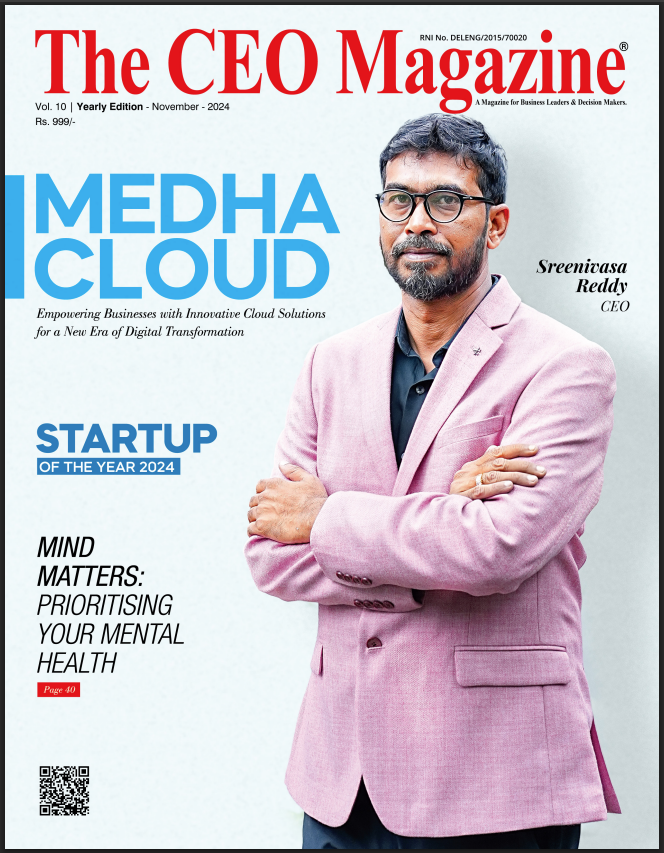
Sreenivasa Reddy is the Founder and CEO of Medha Cloud, recognized as "Startup of the Year 2024" by The CEO Magazine. With over 15 years of experience in cloud infrastructure and IT services, he leads the company's vision to deliver enterprise-grade cloud solutions to businesses worldwide.
More in Managed IT Services
View all
Salesforce Layoffs 2026: Numbers, Timeline & What Is Known
8 min read
Cisco Layoffs 2026: Numbers, Timeline & What Is Known
8 min read
Intel Layoffs 2026: Numbers, Timeline & What Is Known
8 min read
Microsoft Layoffs 2026: Numbers, Timeline & What Is Known
8 min read
Oracle Layoffs 2026: Numbers, Timeline & What Is Known
9 min read
Meta Layoffs 2026: Numbers, Timeline & What Is Known
8 min read