
AI Adoption Statistics 2026 — 67 Enterprise & SMB Data Points

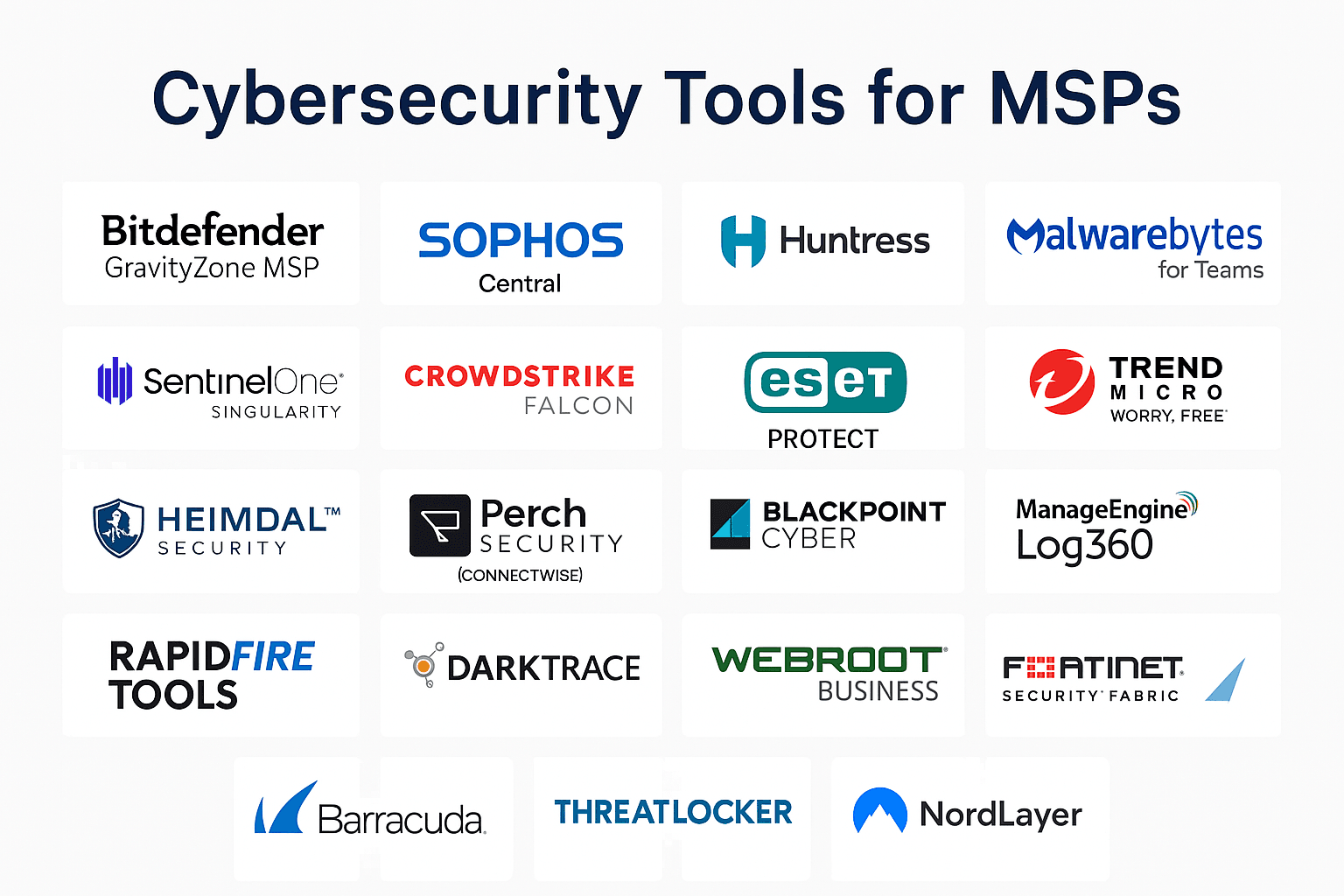
Global spending on artificial intelligence systems is forecast to surpass $300 billion in 2026, with 72% of enterprises reporting at least one AI deployment in production. This page compiles 67 AI adoption statistics drawn from Gartner, IDC, McKinsey, Forrester, and other research firms. Use these numbers to benchmark your own AI initiatives or build a business case for leadership.
Table of Contents
Global AI Spending
Enterprise AI spending has shifted from experimental budgets to line-item operational costs. Our 60 enterprise AI statistics cover the deployment, ROI, and infrastructure details behind these spending numbers. The figures below reflect the total addressable market for AI software, hardware, and services worldwide.
| Metric | Value | Source |
|---|---|---|
| Global AI market size (2026) | $301 billion | IDC |
| AI software revenue (2026) | $157 billion | Gartner |
| AI hardware & chip market (2026) | $98 billion | IDC |
| AI services market (2026) | $46 billion | Forrester |
| AI CAGR (2024–2028) | 29.0% | IDC |
- $301 billion — total global AI spending in 2026, up from $223 billion in 2025 (IDC Worldwide AI Spending Guide). Gartner projects AI software alone will account for $157 billion of that total.
- AI software accounts for 52% of total AI spending, with infrastructure and services splitting the remainder.
- The United States represents 38% of global AI investment, followed by China at 26% and the EU at 18%.
- Enterprise AI spending per employee averages $1,240 annually across companies with 500+ workers.
- By 2028, global AI spending is expected to reach $632 billion, nearly doubling from 2026 levels. For context on how AI fits within the broader technology budget, see the full IT spending statistics for 2026.
Enterprise Adoption Rates
Enterprise AI adoption has crossed the tipping point. The majority of large organizations now run at least one AI workload in production, though the depth and maturity of those deployments varies widely.
- 72% of enterprises have at least one AI workload in production as of Q1 2026 (McKinsey Global AI Survey).
- That's up from 55% in 2024 and just 20% in 2020.
- 83% of companies with 5,000+ employees have deployed AI, compared to 42% of firms with 50–499 employees.
- The average enterprise runs 4.2 AI models in production, up from 1.9 in 2023 (Gartner).
- 28% of enterprises describe their AI adoption as "mature" with embedded AI across multiple business functions.
- Only 8% of organizations have no AI initiatives planned or underway — down from 35% in 2021.
- 65% of enterprises increased their AI budgets in 2026, with a median increase of 22% year-over-year.
- Customer service (56%), IT operations (51%), and marketing (48%) are the top three departments using AI in production.
AI ROI & Productivity Impact
The ROI question has shifted from "does AI deliver value?" to "how much value, and how fast?" These statistics capture what organizations are actually seeing from their deployments.
- 5.8x average ROI on AI investment within 14 months of production deployment (McKinsey Global AI Survey 2025).
- Organizations using AI in IT operations report 31% fewer critical incidents and 28% faster mean time to resolution.
- AI-assisted software developers produce 40–55% more code per week, though code quality metrics vary by implementation (GitHub Copilot Research).
- Customer service teams using AI chatbots resolve 68% of Tier 1 tickets without human escalation.
- The average enterprise saves $4.6 million annually from AI-driven process automation across 3+ departments.
- 44% of AI projects that move to production achieve positive ROI within 12 months (Forrester).
- 37% average productivity improvement in roles augmented by AI tools — compared to 12% improvement from traditional automation alone.
- AI-driven predictive maintenance reduces equipment downtime by 45% and maintenance costs by 25% in manufacturing settings.
Generative AI Adoption
Generative AI is the fastest-adopted technology in enterprise history. ChatGPT crossed 100 million users in two months; enterprise adoption has followed a similarly aggressive trajectory.
| Generative AI Metric | 2026 Value | Source |
|---|---|---|
| Enterprise gen AI adoption rate | 65% | McKinsey |
| Gen AI market size | $67 billion | Bloomberg Intelligence |
| Employees using gen AI at work daily | 38% | Gartner |
| Companies with gen AI policies | 52% | Deloitte |
| Average gen AI budget increase YoY | +42% | IDC |
- 65% of organizations now use generative AI in at least one business function — double the rate from 10 months earlier (McKinsey, Q1 2026).
- The generative AI market is worth $67 billion in 2026, expected to reach $1.3 trillion by 2032 (Bloomberg Intelligence).
- 38% of knowledge workers use generative AI tools daily in their work — up from 11% in 2024.
- 52% of enterprises have formal generative AI governance policies, while 31% are still developing them.
- Microsoft Copilot adoption among M365 enterprise customers reached 41% by Q1 2026.
- The top three generative AI use cases: content creation (71%), code generation (58%), and customer interaction (54%).
- $7,800 per employee per year — the average productivity value of generative AI tools for knowledge workers (Accenture).
SMB AI Adoption
Small and mid-sized businesses are catching up to enterprise AI adoption, largely through SaaS tools that embed AI functionality by default rather than standalone AI platforms.
- 42% of SMBs (50–499 employees) use AI in at least one business process — up from 23% in 2024 (SMB Group).
- 74% of SMBs use AI indirectly through embedded features in their existing software (email filtering, CRM lead scoring, etc.).
- The average SMB spends $18,000 annually on AI-related tools and subscriptions.
- 61% of SMBs cite cost as the primary barrier to AI adoption, followed by lack of expertise (54%) and data quality (41%).
- SMBs using AI for customer service report 23% higher customer satisfaction scores compared to non-AI peers.
- Only 12% of SMBs have a dedicated AI strategy, compared to 58% of enterprises.
AI Workforce Impact
AI is restructuring the labor market faster than any previous technology cycle. These statistics capture the scale of workforce displacement, creation, and transformation.
- AI and automation will displace an estimated 85 million jobs globally by 2028, while creating 97 million new roles (World Economic Forum). The 2026 tech layoffs tracker shows this displacement is already underway across the sector.
- 40% of working hours across all occupations could be affected by large language models (Accenture).
- 63% of companies plan to reskill existing employees rather than hire AI specialists externally.
- Demand for AI/ML engineers has grown 74% year-over-year, with median salaries reaching $185,000 in the US.
- 47% of employees say they're worried about AI replacing their role within five years (PwC Workforce Survey).
- Companies that invest in AI upskilling see 2.3x higher employee retention than those that don't.
- 58% of HR departments now use AI for resume screening, up from 35% in 2023.
AI Adoption by Industry
Industry-level adoption varies dramatically based on data maturity, regulatory requirements, and competitive pressure.
- Technology and software companies lead AI adoption at 88%, followed by financial services at 79% (McKinsey).
- Healthcare AI adoption reached 62% in 2026, driven by clinical decision support, medical imaging analysis, and administrative automation.
- Manufacturing AI spending grew 48% year-over-year, primarily in predictive maintenance and quality control.
- 53% of retailers use AI for demand forecasting, personalization, or inventory optimization.
- Education sector AI adoption remains the lowest at 34%, constrained by budget limitations and regulatory concerns.
- Financial services firms spend an average of $3,200 per employee on AI — 2.6x the cross-industry average.
AI Infrastructure & Compute
Running AI at scale requires serious compute. The infrastructure buildout behind AI is reshaping data center economics, cloud provider revenue, and energy consumption patterns.
- Global AI infrastructure spending (chips, servers, networking) reached $98 billion in 2026 (IDC).
- NVIDIA holds 78% market share in AI training GPUs, with AMD at 12% and Intel/custom silicon at 10%.
- AI workloads account for 24% of all public cloud compute spending, up from 8% in 2023.
- The average cost to train a frontier AI model has reached $200 million, a 10x increase from 2022.
- AI-related electricity consumption is projected to reach 4.5% of US total electricity demand by 2027.
- 67% of enterprises run AI workloads in public cloud, 22% in hybrid environments, and 11% fully on-premises.
- Inference costs have dropped 90% over three years, making production AI deployment accessible to mid-market companies.
AI Risks & Governance
As AI deployments scale, so do the risks. Data privacy, bias, hallucination, and regulatory compliance are top concerns for organizations moving beyond pilot projects.
| AI Risk Factor | % of Enterprises Concerned |
|---|---|
| Data privacy & security | 76% |
| AI hallucination / accuracy | 71% |
| Regulatory compliance | 64% |
| Bias and fairness | 58% |
| Intellectual property risks | 52% |
| Vendor lock-in | 44% |
- 76% of enterprises cite data privacy and security as their top AI risk (Gartner).
- 71% are concerned about AI hallucination and accuracy in customer-facing applications.
- The EU AI Act went into effect in 2025, and 42% of global enterprises have adjusted their AI practices to comply.
- 34% of organizations have experienced an AI-related security incident, including data leakage through LLM prompts.
- Only 29% of companies have a dedicated AI ethics committee or responsible AI lead.
- $2.1 billion in regulatory fines related to AI misuse were issued globally in 2025 — a 7x increase from 2023.
AI & Managed IT Services
For most businesses, AI adoption doesn't mean building from scratch — it means working with managed IT service providers and IT consultants who can implement, manage, and optimize AI-powered tools within existing infrastructure.
- 67% of MSPs now offer AI-related services, including AI-powered monitoring, automated ticketing, and Copilot deployment (Datto/Kaseya Global MSP Report).
- 41% of SMBs prefer to have their MSP manage AI tool deployment rather than handling it internally.
- AI-powered RMM tools reduce false alerts by 62% and improve ticket routing accuracy by 45%.
- MSPs using AI for threat detection report 3.4x faster mean time to detect compared to rule-based systems.
- IT consulting engagements focused on AI strategy grew 89% year-over-year in 2025.
- The average cost of an AI readiness assessment from an IT services provider is $8,000–$25,000 depending on scope.
- 78% of organizations that successfully deployed AI worked with external partners for at least part of the implementation.
Sources
These statistics are compiled from the following research publications and databases:
- IDC Worldwide Artificial Intelligence Spending Guide (2026)
- Gartner Forecast: AI Software Revenue Worldwide (2024–2028)
- McKinsey Global AI Survey 2025/2026
- Forrester AI Predictions 2026
- Bloomberg Intelligence Generative AI Market Report
- Accenture AI Workforce Impact Study
- World Economic Forum Future of Jobs Report 2025
- PwC Global Workforce Hopes & Fears Survey 2025
- Deloitte State of Generative AI in the Enterprise Q1 2026
- Datto/Kaseya Global State of the MSP Report 2025
- SMB Group 2026 SMB AI Adoption Study
- GitHub Copilot Productivity Research Papers
Statistics are updated as new data becomes available. Last updated: March 2026.
Protect your organization with expert healthcare IT support designed for HIPAA compliance.
Healthcare Technology ServicesTopics
Sreenivasa Reddy G
Founder & CEO • 15+ years
Sreenivasa Reddy is the Founder and CEO of Medha Cloud, recognized as "Startup of the Year 2024" by The CEO Magazine. With over 15 years of experience in cloud infrastructure and IT services, he leads the company's vision to deliver enterprise-grade cloud solutions to businesses worldwide.
More in Managed IT Services
View all
Salesforce Layoffs 2026: Numbers, Timeline & What Is Known
8 min read
Cisco Layoffs 2026: Numbers, Timeline & What Is Known
8 min read
Intel Layoffs 2026: Numbers, Timeline & What Is Known
8 min read
Microsoft Layoffs 2026: Numbers, Timeline & What Is Known
8 min read
Oracle Layoffs 2026: Numbers, Timeline & What Is Known
9 min read
Meta Layoffs 2026: Numbers, Timeline & What Is Known
8 min read