
MSP Industry Statistics 2026: Market Size, Growth & M&A Data

The managed services provider (MSP) industry has grown from a niche IT outsourcing model into a $430+ billion global market. Private equity firms are buying MSPs at record rates, cybersecurity services are growing faster than any other segment, and the talent shortage is forcing consolidation across the channel. This page compiles 50+ verified statistics on MSP market size, growth projections, M&A activity, service mix, and workforce challenges for 2026.
MSP Market Size and Growth Projections
The global managed services market has expanded rapidly over the past five years, driven by SMB cloud adoption, cybersecurity demand, and the ongoing IT talent shortage. For the broader market view, see our 55 managed services market statistics. Multiple research firms track this market, and their estimates vary based on what they include in scope.
| Metric | Value | Source |
|---|---|---|
| Global MSP market size (2026) | $430.56 billion | Mordor Intelligence |
| Projected market size (2031) | $704.2 billion | Mordor Intelligence |
| CAGR (2026–2031) | 10.34% | Mordor Intelligence |
| Alternative long-range forecast (2035) | $1.27 trillion | Market Research Future |
| Alternative long-range CAGR | 12.8% | Market Research Future |
| Overall MSP market growth rate (2025–2026) | 14% | Canalys |
| New SMB spending flowing to managed IT (through 2026) | $90 billion+ | CompTIA |
| % of US SMBs planning to increase managed IT spend | 72% | JumpCloud / SMB IT Trends 2026 |
| North America share of global MSP market | 38% | Grand View Research |
| Asia-Pacific MSP market CAGR | 13.2% | Allied Market Research |
The spread between forecasts — $704B vs. $1.27T by the early 2030s — reflects differences in scope. The larger figure includes cloud infrastructure managed by MSPs, while the more conservative estimate focuses on traditional managed services contracts. Either way, the trajectory is clear: double-digit annual growth for at least the next five years.
MSP Service Mix and Revenue Breakdown
What MSPs actually sell has shifted dramatically. Security now dominates the conversation, and the days of MSPs being primarily "outsourced helpdesk plus backup" providers are over.
| Statistic | Value |
|---|---|
| Fastest-growing MSP segment | Cybersecurity — 18% annual growth |
| % of MSPs offering cloud-based infrastructure management | 97% |
| Second most popular MSP service (after security) | Backup and disaster recovery (BDR) |
| % of MSP revenue from recurring contracts | 68% |
| % of MSPs offering compliance-as-a-service | 54% |
| MSPs reporting security as highest-margin service | 61% |
| Average MSP monthly recurring revenue (MRR) | $280,000 |
| MSPs that have added AI-powered services to their stack | 43% |
MSP Service Adoption Rates
The shift toward security is structural, not cyclical. With Gartner projecting global IT spending will surpass $5.6 trillion in 2026, the managed services share continues to grow. Cyber insurance carriers now require specific controls — EDR, MFA, privileged access management — as conditions of coverage. Businesses that can't demonstrate these controls get denied coverage or face massive premium increases, which pushes them toward MSPs that bundle managed security into their IT services.
Why Businesses Outsource IT: Motivation Has Changed
The reasons companies hire MSPs have fundamentally changed over the past five years. Cost reduction used to dominate — now it's just one factor among many, alongside access to security expertise and round-the-clock managed IT services.
| Outsourcing Motivation | 2020 | 2026 |
|---|---|---|
| Cost reduction | 70% | 34% |
| Access to specialized skills | 42% | 67% |
| Security and compliance requirements | 28% | 59% |
| Speed of deployment / time to value | 31% | 48% |
| Focus internal teams on strategic work | 35% | 52% |
Outsourcing Motivations: 2020 vs 2026
Cost reduction dropping from 70% to 34% is the most significant shift. Businesses now outsource IT because they literally cannot hire the people they need internally. The talent shortage — not the price tag — is driving adoption. The latest SMB IT spending data confirms this trend across companies under 500 employees.
MSP Mergers, Acquisitions & Private Equity Activity
The MSP M&A market has been on a tear since 2020, and private equity is the engine behind it. PE firms see MSPs as ideal roll-up targets: recurring revenue, high retention rates, and fragmented ownership.
| M&A Metric | Value |
|---|---|
| PE firms involved in MSP acquisitions (2023) | 40%+ of all MSP deals |
| Acquisitions by Top 20 MSPs (2025) | 44 acquisitions |
| Average MSP acquisition multiple (EBITDA) | 8–12x for $5M+ revenue MSPs |
| Median MSP deal size (2025) | $15–25 million |
| MSP owners considering selling within 3 years | 29% |
| Total MSP M&A transactions (2024) | 280+ |
| PE-backed MSP platforms in North America | 75+ |
| Average time from PE investment to exit | 4.2 years |
The consolidation trend has real implications for buyers. PE-backed MSPs often standardize their stack aggressively, which can improve consistency but sometimes reduces flexibility for clients with unusual requirements. If your MSP just got acquired, pay attention to changes in tooling, staffing, and contract terms over the following 12 months.
MSP Workforce and Hiring Challenges
The single biggest constraint on MSP growth isn't capital — it's people. The IT skills gap is widening, and every major MSP survey in 2025 and 2026 identifies hiring as the top barrier to scaling.
| Workforce Statistic | Value |
|---|---|
| MSPs identifying hiring as primary growth constraint | 52% |
| IT leaders citing cloud/security recruiting difficulties | 68% |
| Average time to fill a cybersecurity role at an MSP | 6.3 months |
| MSP technician turnover rate (annual) | 18–22% |
| MSPs using white-label services to fill capability gaps | 47% |
| Median MSP technician salary (US, 2026) | $72,000–$85,000 |
| MSPs investing in automation to reduce headcount needs | 63% |
This is why the white-label MSP services model has taken off. Rather than spending six months trying to hire a cloud security engineer, an MSP can partner with a provider that already has the team in place. The same logic applies to NOC services — 24/7 monitoring requires staffing three shifts, which is impractical for MSPs under $5M in revenue.
MSP Technology Stack and Platform Trends
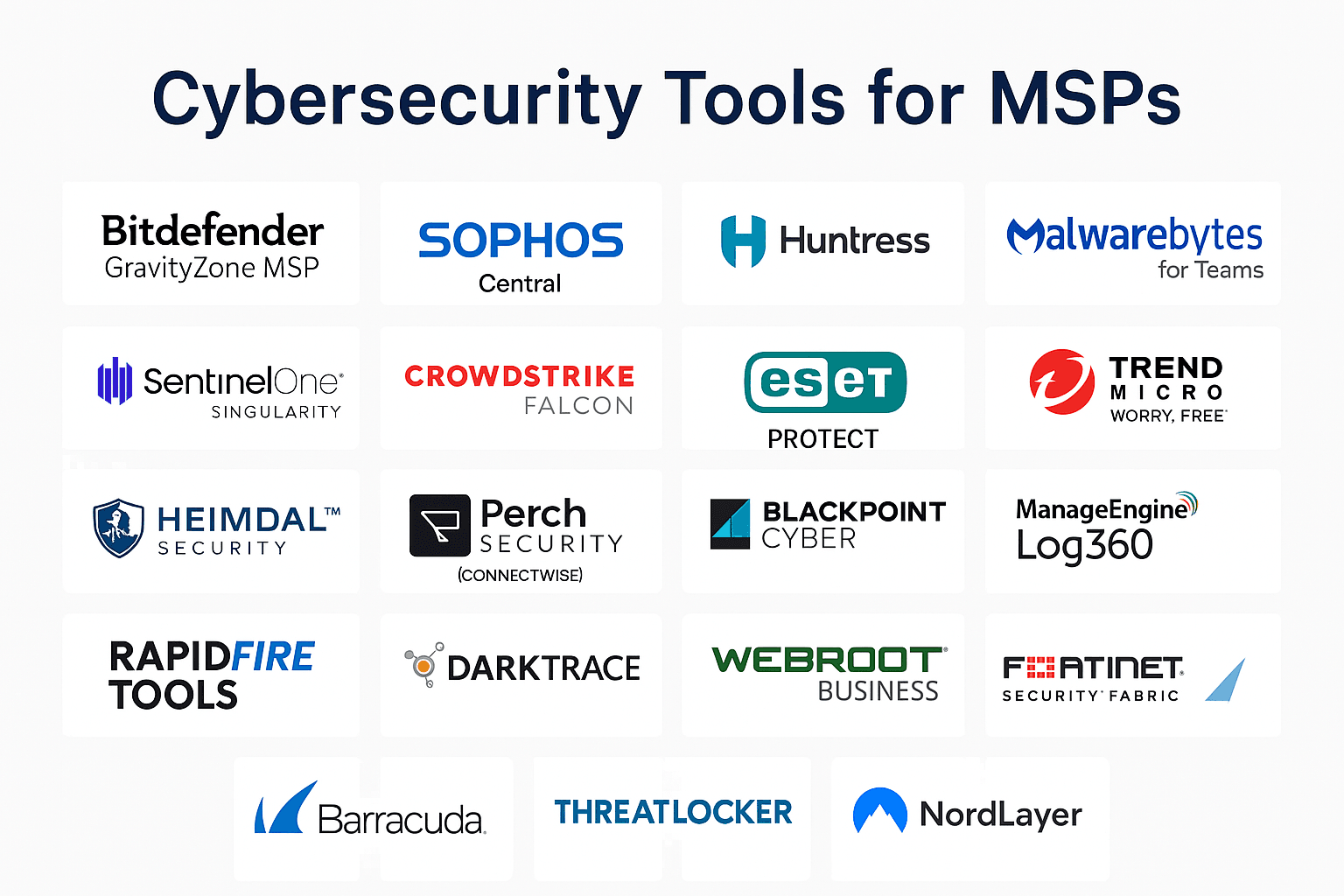
The tools MSPs use are consolidating around a few dominant platforms, and the vendor landscape is shifting fast.
| Technology Trend | Adoption Rate / Detail |
|---|---|
| MSPs using PSA + RMM from single vendor | 58% |
| MSPs running Microsoft-centric stacks | 74% |
| MSPs deploying EDR (not just AV) | 81% |
| Average number of tools in MSP stack | 12–16 tools |
| MSPs offering Microsoft 365 management | 92% |
| MSPs with SOC capabilities (internal or outsourced) | 56% |
MSP Client Retention and Satisfaction
Client retention is the lifeblood of the MSP model. Losing a client wipes out months of acquisition cost, so the industry tracks churn obsessively.
- Average MSP client retention rate: 89–93% annually
- Top reason for MSP churn: Poor communication and slow response times (not price)
- Average MSP contract length: 2.4 years
- MSPs with dedicated account managers for clients over 50 users: 71%
- Net Promoter Score (NPS) for top-quartile MSPs: 62
- NPS for bottom-quartile MSPs: 18
Regional MSP Market Size (2026)
Regional MSP Market Data
| Region | Market Size (2026) | Growth Rate | Key Driver |
|---|---|---|---|
| North America | $163.6B | 9.8% | Cybersecurity mandates, PE consolidation |
| Europe | $112.0B | 10.1% | GDPR compliance, NIS2 directive |
| Asia-Pacific | $98.4B | 13.2% | Cloud-first digital transformation |
| Latin America | $32.1B | 11.5% | SMB digitization, nearshoring growth |
| Middle East & Africa | $24.5B | 12.7% | Government IT modernization |
What These Numbers Mean for IT Buyers
If you're evaluating managed IT providers, the data points above have practical implications:
- Expect price increases. With 14% market growth and 18% growth in security services, MSPs have pricing power. If your contract hasn't increased in two years, it will at renewal.
- Security is non-negotiable. With 97% of MSPs offering cloud infrastructure management and cybersecurity growing at 18%, any MSP that doesn't include EDR, MFA enforcement, and security monitoring in their base offering is behind the market.
- Check for PE ownership. With 40%+ of acquisitions involving PE, your MSP may have changed hands recently. Ask about ownership structure, upcoming changes to tooling or staffing, and contract assignment provisions.
- The talent shortage benefits you indirectly. The 52% of MSPs constrained by hiring are turning to white-label partnerships, which means even smaller MSPs can access enterprise-grade security and cloud engineering through their partner network.
For businesses that need managed IT support, our IT services team provides the full stack — monitoring, helpdesk, security, cloud management — with transparent pricing and SLAs that include resolution time commitments, not just response time.
Sources: Mordor Intelligence (2026), Market Research Future (2025), Canalys Channel Analysis (2026), CompTIA IT Industry Outlook 2026, ChannelE2E M&A Tracker, Datto Global State of the MSP Report 2025, ConnectWise IT Nation Survey 2025, JumpCloud SMB IT Trends 2026, Grand View Research, Allied Market Research.
Compare Microsoft 365 plans and find the right license for your organization.
Microsoft 365 Licensing OptionsTopics
Sreenivasa Reddy G
Founder & CEO • 15+ years
Sreenivasa Reddy is the Founder and CEO of Medha Cloud, recognized as "Startup of the Year 2024" by The CEO Magazine. With over 15 years of experience in cloud infrastructure and IT services, he leads the company's vision to deliver enterprise-grade cloud solutions to businesses worldwide.
More in White Label MSP
View all
NinjaOne Alternatives — 7 RMMs Compared by an MSP That Runs Them (2026)
9 min read
SentinelOne Pricing — Singularity Tiers Per Endpoint, MSP Rates & CrowdStrike Math (2026)
7 min read
NinjaOne Pricing — What You'll Actually Pay Per Endpoint (MSP Operator Breakdown, 2026)
8 min read
55 Managed Services Market Statistics for 2026 — MSP Growth Data
20 min read
Kaseya Fires 250 People After 'Very Strong' 2025 — What MSPs Should Know
9 min read
The Ultimate MSP Stack 2026: Tools Every Managed Service Provider Should Use
20 min read