
55 Managed Services Market Statistics for 2026 — MSP Growth Data

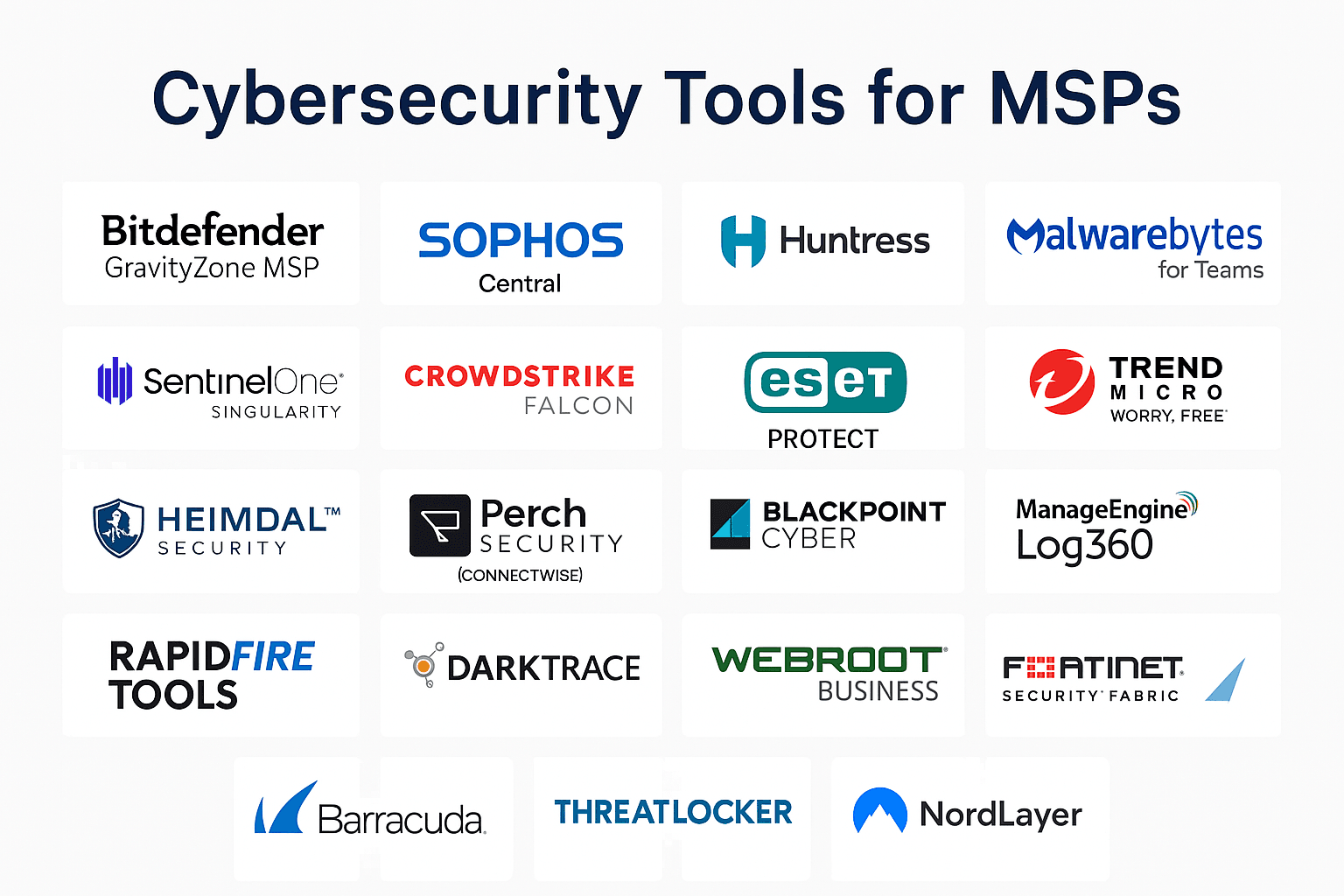
The managed services industry has evolved from a niche IT support model into a $380 billion global market. MSPs (managed service providers) now handle everything from basic helpdesk to full security operations, cloud management, and compliance — serving as the de facto IT department for millions of businesses worldwide. The consolidation wave that began in 2021 has accelerated, private equity continues to pour billions into the space, and the shift toward security-focused managed services is reshaping pricing, margins, and service delivery. Many businesses now rely on managed IT services instead of staffing a full internal IT department.
This article compiles 55 statistics about the managed services market in 2026, drawn from Gartner, IDC, Canalys, MarketsandMarkets, Datto, ConnectWise, Channel Futures, and CompTIA. These numbers cover market sizing, growth trajectories, pricing, service mix, and the operational realities of running and buying managed services.
Global Market Size & Growth
1. The global managed services market is projected to reach $380 billion in 2026, growing at a CAGR of 11.2% from $311 billion in 2024 (MarketsandMarkets).
2. Gartner projects the market will hit $510 billion by 2029, driven by cybersecurity managed services, cloud management, and AI-augmented operations.
3. North America represents 41% of global managed services revenue ($155.8 billion), followed by Europe at 32% and Asia-Pacific at 20% (IDC).
4. Managed security services (MSSP/MDR) is the fastest-growing segment at 17.8% CAGR, followed by managed cloud services at 14.3% and managed network services at 8.6% (Gartner). Our MSP industry statistics cover the M&A activity and service mix driving this growth.
5. The number of MSPs globally exceeds 150,000, though the top 500 MSPs account for roughly 38% of total industry revenue (Channel Futures MSP 501).
Revenue & Financial Benchmarks
6. The median MSP generates $2.8 million in annual recurring revenue (ARR), though this varies dramatically — the top quartile exceeds $12 million (Datto Global State of the MSP, 2025).
7. Average MSP gross margins sit at 52% in 2025, up from 48% in 2022, as providers shift toward higher-margin security and cloud management services (ConnectWise IT Nation Benchmark).
8. Recurring revenue now represents 74% of total MSP revenue, up from 62% in 2020 — the industry has largely completed its shift away from project-based billing (Datto).
MSP Revenue Mix 2026
9. The average MSP EBITDA margin improved to 18.4% in 2025, up from 14.7% in 2022, reflecting better pricing discipline and operational efficiency (Service Leadership Index).
10. MSPs serving exclusively SMB clients (under 500 employees) generate average per-seat revenue of $185/user/month, while those serving mid-market and enterprise clients average $310/user/month (ConnectWise). The SMB IT spending data shows that 48% of businesses with 50-499 employees now use an MSP as their primary IT support model.
11. Revenue per employee for the average MSP: $142,000 per year. Top-performing MSPs exceed $200,000, driven by automation and higher service-to-technician ratios (Service Leadership).
Service Adoption & Delivery
12. The top five managed services by adoption rate: Remote monitoring (94%), outsourced helpdesk (91%), backup/DR (89%), email management (84%), and security services (81%) (Datto).
13. Managed security services are now offered by 81% of MSPs, up from 58% in 2021 — the single fastest-growing service category (Datto).
14. 67% of MSPs now offer managed cloud services (IaaS/PaaS management), up from 43% in 2022, as client workloads migrate to Azure, AWS, and Google Cloud (CompTIA).
15. vCIO/strategic IT advisory services are offered by 54% of MSPs, typically as part of premium tier packages that command 40-60% higher per-user pricing (ConnectWise).
16. The average MSP manages 1,247 endpoints across all clients, though this ranges from under 200 for small local MSPs to over 50,000 for large regional providers (Datto).
17. 78% of MSPs use a tiered service model (bronze/silver/gold or equivalent), with the mid-tier package being the most popular at 56% of client base (ConnectWise).
18. Automation handles 38% of MSP service delivery tasks in 2026, up from 22% in 2023 — primarily ticket routing, patch deployment, alerting, and basic remediation (Datto).
Pricing Benchmarks
| Service Tier | Per User/Month | Typical Includes |
|---|---|---|
| Basic / Monitor | $50–$85 | RMM, patch management, basic AV, alerting |
| Standard / Managed | $110–$185 | Basic + helpdesk, backup, M365 mgmt, vendor mgmt |
| Premium / Complete | $185–$325 | Standard + security ops, compliance, vCIO, cloud mgmt |
19. The average managed services contract value for an SMB with 50 users: $9,250 per month or $111,000 per year (ConnectWise IT Nation Benchmark).
20. Per-user pricing increased an average of 8.3% in 2025, outpacing inflation, as MSPs passed through higher security tool costs and labor expenses (Datto).
21. Security-inclusive managed services packages command a 42% premium over packages without security — the single largest pricing differentiator (ConnectWise).
22. Average contract length: 2.1 years, down from 3 years in 2019, as clients push for flexibility. However, MSPs with longer contracts report 26% better client retention (Datto).
23. Client acquisition cost (CAC) for the average MSP: $4,200 per client, with payback periods averaging 7.2 months on standard managed services contracts (Service Leadership).
White-Label & NOC/SOC Services
24. 43% of MSPs use white-label services for at least one service line — most commonly NOC monitoring, security operations, and helpdesk overflow (CompTIA).
25. The white-label managed services market grew 22% year-over-year in 2025, as MSPs outsource back-office operations to scale without hiring (Canalys).
26. 68% of MSPs using white-label NOC services report improved after-hours coverage as the primary benefit, followed by reduced labor costs (54%) and faster ticket resolution (47%) (Datto).
27. Average white-label NOC pricing: $6-$12 per device per month for 24/7 monitoring, alerting, and Tier 1 remediation (Channel Futures).
28. White-label SOC services cost MSPs an average of $8-$15 per endpoint per month, significantly less than building an internal SOC which costs $1.2-$2.8 million annually (Datto).
29. MSPs that use white-label services achieve 31% higher profit margins on the services they outsource compared to delivering them in-house (Service Leadership).
Vertical Specialization
30. 58% of MSPs now specialize in at least one vertical (healthcare, finance, legal, manufacturing), up from 39% in 2021 — generalist MSPs are declining (CompTIA).
31. Healthcare-focused MSPs command 25-35% pricing premiums over generalist providers, reflecting HIPAA compliance expertise and higher liability insurance costs (HIMSS).
32. The most common MSP verticals: Healthcare (34%), financial services (28%), legal (22%), manufacturing (19%), and education (16%) — many MSPs serve multiple verticals (CompTIA).
33. Vertically specialized MSPs report 38% higher client retention rates and 22% shorter sales cycles compared to generalist MSPs (Service Leadership).
M&A and Industry Consolidation
34. There were 267 MSP acquisitions in 2025, up from 234 in 2024 and 198 in 2023 — consolidation continues to accelerate (Canalys MSP M&A Tracker).
35. Private equity firms were involved in 72% of MSP acquisitions in 2025, either as buyers or as backers of platform MSPs making add-on acquisitions (Canalys).
36. Average MSP acquisition multiples: 7-10x EBITDA for well-run MSPs with $5M+ ARR and high recurring revenue percentages. Smaller MSPs trade at 4-6x (Service Leadership).
37. The top 20 MSP platform companies (PE-backed roll-ups) now control an estimated 12% of the U.S. managed services market, up from 6% in 2022 (Canalys).
38. 34% of MSP owners plan to sell their business within the next five years, creating a steady pipeline for acquirers (Channel Futures).
Technology Stack & Operations
39. The average MSP uses 11.3 core software tools to deliver services — RMM, PSA, documentation, backup, security, email, remote access, and billing platforms (Datto).
40. ConnectWise and Datto/Kaseya dominate the MSP technology stack — 78% of MSPs use at least one product from these two vendors (Channel Futures).
41. AI and automation adoption among MSPs: 44% use AI-assisted ticketing, 38% use automated patch management, 29% use AI-powered threat detection (Datto).
42. The average MSP technician manages 156 endpoints, up from 118 in 2022, driven by better automation and tooling (Service Leadership).
43. MSP service delivery labor costs represent 48% of total operating expenses, making labor efficiency the single biggest lever for profitability (ConnectWise).
Client Demographics & Satisfaction
44. The typical MSP client has 47 employees and 62 managed endpoints (workstations, servers, mobile devices, network gear) (Datto).
45. Client satisfaction with MSPs averages 4.1 out of 5, with security responsiveness and communication being the two factors most correlated with high satisfaction (CompTIA).
46. 28% of MSP clients switched providers in the past three years, with the top reasons being: poor communication (41%), security incident handling (33%), and pricing increases (28%) (CompTIA).
47. MSP client churn rates average 8.4% annually, with the lowest churn (under 5%) seen among MSPs offering co-managed IT and vCIO services (Service Leadership).
Workforce & Talent
48. The MSP industry employs an estimated 1.2 million people in the U.S. alone, making it one of the largest IT employment sectors (CompTIA).
49. 76% of MSPs report difficulty hiring qualified technicians, with security analysts and cloud engineers being the hardest roles to fill (Datto). The IT skills gap statistics show 4.8 million unfilled cybersecurity positions globally — a number that directly constrains MSP growth.
50. Average MSP technician salary in the U.S.: $62,000 for Tier 1, $78,000 for Tier 2, $95,000 for Tier 3/senior engineers, and $115,000 for security-focused roles (Robert Half).
51. MSP employee turnover averages 19% annually, costing the average MSP $184,000 per year in recruitment, training, and lost productivity (Service Leadership).
Future Outlook
52. By 2028, Gartner predicts that 75% of mid-market companies will use managed services for their primary security operations, up from 52% today.
53. AI-augmented service delivery will reduce MSP labor requirements by an estimated 25-30% by 2029, though this will shift roles toward higher-skill advisory work rather than eliminating jobs (IDC).
54. The managed services model is expanding into OT/IoT management, with 28% of MSPs now offering industrial and IoT monitoring services — a segment growing at 34% annually (Canalys).
55. Regulatory-driven managed compliance services (HIPAA, SOC 2, CMMC, NIS2) represent the fastest-growing new service category among MSPs, with 47% planning to offer dedicated compliance management by 2027 (CompTIA).
What These Numbers Mean for Businesses
The managed services market is maturing rapidly. The statistics point to several key takeaways:
- Security has become the growth engine. MSPs offering security services grow faster, charge more, and retain clients longer. If your MSP doesn't have a security practice, they're falling behind the market.
- Pricing reflects real costs. The 8.3% price increase in 2025 mirrors rising security tool costs and labor expenses. Businesses shopping for the cheapest MSP are likely getting providers who cut corners on security.
- Specialization wins. Vertically specialized MSPs deliver better outcomes with higher retention. If your industry has specific compliance requirements, a generalist MSP is a risk.
- White-label services make scale possible. The 43% of MSPs using white-label services aren't cutting corners — they're accessing 24/7 NOC and managed services capabilities that would cost millions to build internally.
Medha Cloud operates across this market as both a direct managed IT services provider and a white-label partner for MSPs needing NOC services and managed services delivery. Whether you're a business looking for IT support or an MSP looking to scale, these statistics reflect the market we operate in every day.
Sources: MarketsandMarkets, Grand View Research, Canalys, Datto, ConnectWise, CompTIA, Channel Futures MSP 501.
Protect your organization with expert healthcare IT support designed for HIPAA compliance.
HIPAA IT Compliance SupportTopics
Sreenivasa Reddy G
Founder & CEO • 15+ years
Sreenivasa Reddy is the Founder and CEO of Medha Cloud, recognized as "Startup of the Year 2024" by The CEO Magazine. With over 15 years of experience in cloud infrastructure and IT services, he leads the company's vision to deliver enterprise-grade cloud solutions to businesses worldwide.
More in White Label MSP
View all
NinjaOne Alternatives — 7 RMMs Compared by an MSP That Runs Them (2026)
9 min read
SentinelOne Pricing — Singularity Tiers Per Endpoint, MSP Rates & CrowdStrike Math (2026)
7 min read
NinjaOne Pricing — What You'll Actually Pay Per Endpoint (MSP Operator Breakdown, 2026)
8 min read
MSP Industry Statistics 2026: Market Size, Growth & M&A Data
16 min read
Kaseya Fires 250 People After 'Very Strong' 2025 — What MSPs Should Know
9 min read
The Ultimate MSP Stack 2026: Tools Every Managed Service Provider Should Use
20 min read