
Microsoft 365 vs Google Workspace in 2026: The Definitive Enterprise Comparison Guide

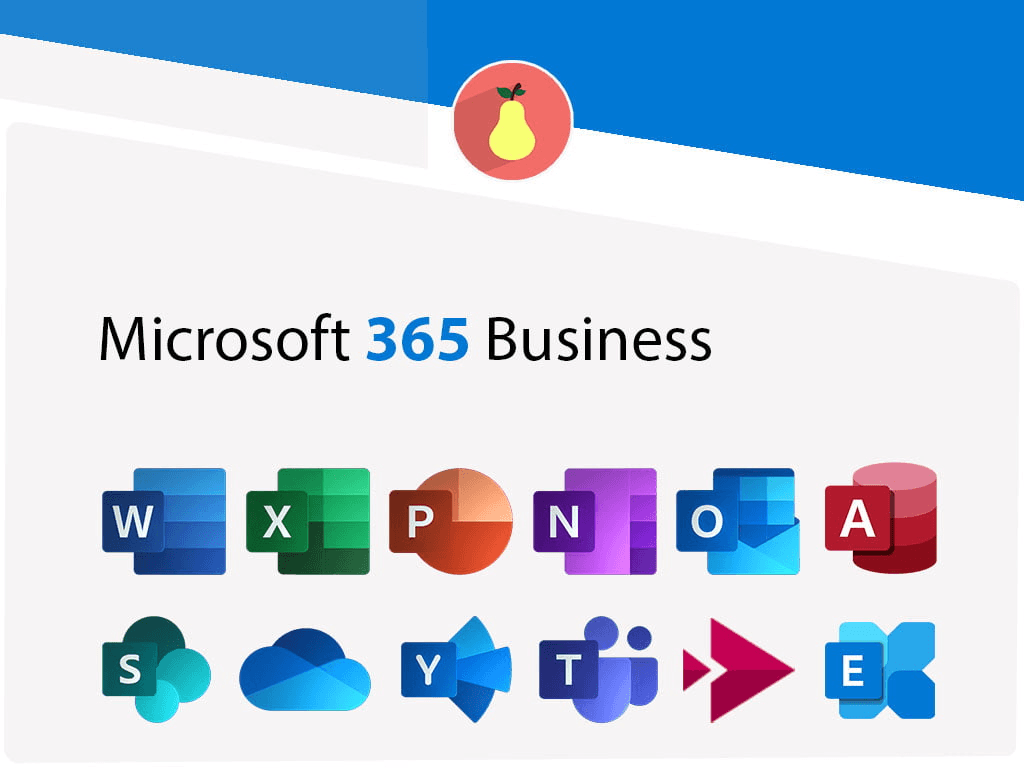
The Microsoft 365 vs Google Workspace debate has shifted dramatically in 2026. With Microsoft's Copilot AI deeply embedded across the suite and Google's Gemini transforming Workspace, this isn't the same comparison it was two years ago. Both platforms now serve over 400 million commercial users combined, and the gap between them has narrowed in some areas while widening in others.
After deploying and managing both platforms across 500+ organizations — from 10-person startups to 5,000-seat enterprises — we've built this comparison on real-world data, not marketing claims. Every recommendation here is backed by actual deployment outcomes, user adoption metrics, and total cost of ownership analysis.
Whether you're choosing a platform for a new business, planning a migration between suites, or evaluating whether to consolidate onto a single platform, this guide gives you the data to make that decision with confidence.
Quick Decision Matrix: Which Platform Fits Your Organization?
| Business Profile | Recommended Platform | Why |
|---|---|---|
| Startup (1-25 users), cloud-native, minimal compliance needs | Google Workspace | Lower entry cost, simpler admin, faster onboarding |
| SMB (25-200 users), mixed desktop/web workflows | Microsoft 365 | Better desktop apps, broader app ecosystem, Teams integration |
| Healthcare, legal, finance (any size) | Microsoft 365 | Superior compliance tools, eDiscovery, HIPAA BAA at lower tiers |
| Education (K-12) | Google Workspace | Chromebook ecosystem, simpler device management, free tier |
| Enterprise (500+ users) with on-premises infrastructure | Microsoft 365 | Hybrid AD integration, Exchange migration path, Intune MDM |
| Fully remote, browser-first team | Google Workspace | Native web apps, real-time collaboration superiority, lighter footprint |
| MSP managing multiple tenants | Microsoft 365 | Partner Center, delegated admin, white-label management tools |
2026 Market Landscape: Key Statistics
Before diving into the feature-by-feature comparison, here's where both platforms stand in 2026:
| Metric | Microsoft 365 | Google Workspace |
|---|---|---|
| Commercial users (2026) | ~400 million | ~10 million paying businesses |
| Fortune 500 adoption | ~95% | ~60% (often alongside M365) |
| AI assistant | Copilot (GPT-4 based) | Gemini (Google DeepMind) |
| AI add-on cost | $30/user/month | $30/user/month (Gemini Business) |
| Desktop app support | Full native apps (Win/Mac) | Web-only (PWA wrappers) |
| Offline capability | Full offline with sync | Limited (Chrome extension) |
| Default storage (business tier) | 1 TB/user | 2 TB/user (pooled) |
| Data residency options | Multi-Geo (paid add-on) | Data regions (select plans) |
| Compliance certifications | 90+ | 50+ |
1. Pricing Comparison: Total Cost of Ownership (2026)
List price per user per month tells only part of the story. Here's what organizations actually spend when you factor in add-ons, training, and hidden costs:
Base Plan Comparison
| Tier | Microsoft 365 | Price | Google Workspace | Price |
|---|---|---|---|---|
| Entry | Business Basic | $6.00/user/mo | Business Starter | $7.20/user/mo |
| Mid | Business Standard | $12.50/user/mo | Business Standard | $14.40/user/mo |
| Premium | Business Premium | $22.00/user/mo | Business Plus | $18.00/user/mo |
| Enterprise | E3 | $36.00/user/mo | Enterprise Standard | $23.00/user/mo |
| Enterprise+ | E5 | $57.00/user/mo | Enterprise Plus | $30.00/user/mo |
True TCO Analysis: 100-User Organization Over 3 Years
| Cost Category | Microsoft 365 E3 | Google Workspace Enterprise Standard |
|---|---|---|
| Base licensing (36 months) | $129,600 | $82,800 |
| AI add-on (50% adoption) | $54,000 | $54,000 |
| Migration costs | $15,000-25,000 | $15,000-25,000 |
| Training & change management | $8,000-12,000 | $5,000-8,000 |
| Third-party security add-ons needed | $0 (included in E3) | $12,000-24,000 |
| Backup solution (third-party) | $7,200-10,800 | $7,200-10,800 |
| 3-Year TCO Range | $213,800-$231,400 | $176,000-$204,600 |
| Per user/month (effective) | $59.39-$64.28 | $48.89-$56.83 |
Key insight: Google Workspace appears 15-25% cheaper at the enterprise tier, but the gap narrows significantly when you add security tools that M365 includes natively. For organizations in regulated industries, M365's built-in compliance and security features often make it the more cost-effective choice.
Need help calculating TCO for your specific organization? Our IT consulting team provides free assessment reports comparing both platforms against your requirements.
2. Core Productivity Applications
Document Editing & Creation
| Feature | Microsoft 365 (Word/Excel/PPT) | Google Workspace (Docs/Sheets/Slides) |
|---|---|---|
| Desktop application | Full-featured native apps | None (web only) |
| Web application | Capable but limited vs desktop | Primary experience, excellent |
| Offline editing | Full offline with auto-sync | Limited (requires Chrome extension) |
| Advanced formatting | Industry-leading (Word) | Basic to moderate |
| Spreadsheet power | Excel: 1M+ rows, Power Query, VBA | Sheets: 10M cells, Apps Script |
| Presentation design | PowerPoint: superior animations | Slides: simpler, adequate |
| Real-time co-authoring | Good (improved significantly) | Excellent (native strength) |
| Version history | Detailed, named versions | Granular, auto-saved |
| Template ecosystem | Thousands of professional templates | Growing but smaller library |
| AI writing assistant | Copilot in Word | Gemini in Docs |
Winner: Microsoft 365 for organizations needing advanced document formatting, complex spreadsheets, or offline work. Google Workspace wins for teams that prioritize real-time collaboration and prefer browser-based workflows.
Where Each Platform Excels
Microsoft 365 strengths:
- Excel remains unmatched for financial modeling, pivot tables, Power Query ETL, and VBA macros — no Google Sheets equivalent exists for enterprise data analysis
- Word's advanced formatting, mail merge, and document automation make it essential for legal, healthcare, and publishing workflows
- PowerPoint's animation engine, Morph transitions, and Designer AI produce presentation quality that Slides cannot match
Google Workspace strengths:
- Real-time collaboration in Docs/Sheets/Slides is noticeably smoother — changes appear instantly with zero lag
- Google Sheets'
QUERY()function and connected sheets (BigQuery) make it powerful for data teams despite row limitations - Simpler interface reduces training time by 40% for new users compared to M365
3. Email & Calendar: Outlook vs Gmail
| Feature | Outlook (Microsoft 365) | Gmail (Google Workspace) |
|---|---|---|
| Interface | Feature-rich, customizable | Clean, search-first design |
| Search quality | Good (improved with AI) | Superior (Google's core strength) |
| Offline access | Full desktop + web offline | Limited web offline |
| Shared mailboxes | Native, unlimited | Collaborative inboxes (limited) |
| Distribution groups | Dynamic + static groups | Google Groups |
| Email aliases | Unlimited | 30 per user |
| Send-as delegation | Full support | Full support |
| Calendar sharing | Granular permissions | Simpler but effective |
| Room/resource booking | Advanced (Outlook Rooms) | Basic but functional |
| Journaling/archiving | Built-in compliance archiving | Vault (separate product) |
| Mail flow rules | Exchange transport rules (powerful) | Routing rules (basic to moderate) |
| Spam detection accuracy | ~98% | ~99.5% |
| Max attachment size | 150 MB | 25 MB (links for larger) |
Migration consideration: Moving from Exchange/Outlook to Gmail is the most disruptive change in any M365-to-Google migration. Shared mailboxes, distribution lists, mail flow rules, and calendar delegates all require careful planning. Our migration specialists typically allocate 40% of project time to email migration alone.
4. Communication & Meetings: Teams vs Google Meet
| Feature | Microsoft Teams | Google Meet + Chat |
|---|---|---|
| Video meeting capacity | 1,000 participants (10K view-only) | 500 participants (Enterprise Plus) |
| Meeting recording | OneDrive/SharePoint storage | Google Drive storage |
| Live transcription | 33 languages | 6 languages |
| AI meeting summaries | Copilot (auto notes + actions) | Gemini (auto notes) |
| Breakout rooms | Up to 50 rooms | Up to 100 rooms |
| Persistent chat | Threaded channels + DMs | Spaces + DMs |
| External collaboration | Guest access, shared channels | External sharing |
| Phone system (PSTN) | Teams Phone (native) | Google Voice (separate) |
| Webinar capability | Teams Webinars + Town Halls | Limited (third-party needed) |
| App integrations | 2,000+ in Teams app store | ~500 in Marketplace |
| Whiteboard | Microsoft Whiteboard (integrated) | Google Jamboard (being deprecated) |
Winner: Microsoft Teams dominates as a unified communications platform. It replaces Slack, Zoom, and phone systems in a single tool. Google Meet is excellent for video meetings but lacks Teams' depth as a collaboration hub.
5. Security & Identity Management
Security is where the platforms diverge most significantly, and it's often the deciding factor for security-conscious organizations.
| Security Feature | Microsoft 365 | Google Workspace |
|---|---|---|
| Identity provider | Entra ID (Azure AD) | Google Identity |
| Conditional Access | Advanced (location, device, risk-based) | Context-Aware Access (similar) |
| MFA options | Authenticator, FIDO2, phone, SMS | Google Authenticator, Titan keys, phone |
| Passwordless auth | Windows Hello, FIDO2 keys | Passkeys, security keys |
| Data Loss Prevention | DLP across all apps (E3+) | DLP for Drive + Gmail (Enterprise) |
| Information protection | Sensitivity labels, encryption | Client-side encryption (CSE) |
| Email threat protection | Defender for Office 365 | Advanced phishing protection |
| Endpoint management | Intune (full MDM/MAM) | Endpoint management (basic to advanced) |
| SIEM integration | Microsoft Sentinel (native) | Chronicle SIEM |
| Zero Trust framework | Comprehensive (identity + device + app) | BeyondCorp Enterprise |
| Insider risk management | Built-in (E5) | Third-party required |
| Attack simulation | Built-in phishing simulations | Third-party required |
| Security score/dashboard | Microsoft Secure Score | Security Investigation Tool |
Winner: Microsoft 365 has a significantly broader and deeper security stack. For organizations implementing managed IT security, M365's native security tools reduce the need for third-party solutions by 60-70%.
6. Compliance & Data Governance
For regulated industries — healthcare, finance, legal, government — compliance capabilities are non-negotiable.
| Compliance Feature | Microsoft 365 | Google Workspace |
|---|---|---|
| HIPAA BAA | Available at Business Premium+ | Available at Enterprise tier |
| SOC 1/2/3 | Yes | Yes |
| ISO 27001/27017/27018 | Yes | Yes |
| FedRAMP | High (GCC High) | Moderate |
| GDPR tools | Compliance Manager, DSR tools | Data regions, deletion tools |
| eDiscovery | Advanced eDiscovery (E5) | Google Vault |
| Legal hold | In-place hold, litigation hold | Vault holds |
| Retention policies | Granular (per app, per label) | Vault retention rules |
| Audit logs | Unified audit log (180 days, 10yr with E5) | Audit log (6 months, extended with add-on) |
| Communication compliance | Built-in (E5) | Third-party required |
| Information barriers | Built-in | Not available |
| Customer Lockbox | Available (E5) | Access Transparency |
Winner: Microsoft 365 for regulated industries, especially healthcare organizations needing HIPAA-compliant IT infrastructure. Google Workspace meets basic compliance needs but requires third-party tools for advanced governance.
7. AI Capabilities: Copilot vs Gemini (2026)
AI is the new battleground, and both platforms have invested billions. Here's how they compare in practice:
| AI Feature | Microsoft Copilot | Google Gemini |
|---|---|---|
| Pricing | $30/user/month add-on | $30/user/month (Gemini Business) |
| Document drafting | Copilot in Word — generates from prompts, rewrites sections | Gemini in Docs — similar capabilities |
| Spreadsheet analysis | Copilot in Excel — formula generation, data analysis, charts | Gemini in Sheets — formula suggestions, data insights |
| Email drafting | Copilot in Outlook — drafts, summarizes threads | Gemini in Gmail — smart compose, summarize |
| Meeting intelligence | Copilot in Teams — real-time notes, action items, summaries | Gemini in Meet — auto-notes, translations |
| Presentation creation | Copilot in PowerPoint — generates slides from prompts | Gemini in Slides — basic generation |
| Cross-app intelligence | Microsoft Graph (searches across all M365 data) | Google's unified data model |
| Custom AI agents | Copilot Studio (build custom agents) | AppSheet + Gemini |
| Code generation | Copilot in VS Code (GitHub Copilot) | Gemini Code Assist |
| Security AI | Copilot for Security | Chronicle AI |
Assessment: Microsoft Copilot has deeper integration across the suite, especially in Teams and Excel. Gemini excels at search-related tasks and has a more natural conversational interface. Both are evolving rapidly — what matters most is which platform's base apps you prefer, as the AI add-on amplifies existing workflows.
8. File Storage & Collaboration: OneDrive/SharePoint vs Google Drive
| Feature | OneDrive + SharePoint | Google Drive |
|---|---|---|
| Personal storage | 1 TB per user | Pooled storage (varies by plan) |
| Max file size | 250 GB | 5 TB |
| File sync client | OneDrive sync (excellent) | Drive for desktop (good) |
| Team file management | SharePoint sites (structured) | Shared drives (simpler) |
| Permissions model | Granular (site, library, folder, file) | Simpler (drive, folder, file) |
| External sharing | Configurable per site/policy | Domain-wide or per-file |
| Version history | 500 versions (100 days) | 100 versions (30 days) |
| Intranet capability | SharePoint sites (full CMS) | Google Sites (basic) |
| Search across files | Microsoft Search (good) | Google Search (excellent) |
| Known Folder Move | Yes (Desktop, Documents, Pictures) | No equivalent |
Winner: Microsoft 365 for enterprise file management thanks to SharePoint's structured site architecture. Google Drive wins for simplicity and search quality. Organizations managing large file repositories should also consider cloud storage solutions that complement either platform.
9. Administration & IT Management
IT administrators spend significant time managing these platforms. Here's how the admin experience compares:
| Admin Feature | Microsoft 365 Admin | Google Workspace Admin |
|---|---|---|
| Admin portal | Multiple portals (unified improving) | Single admin console |
| PowerShell/CLI management | Extensive PowerShell + Graph API | gcloud CLI + Admin SDK |
| Delegated administration | RBAC with 70+ admin roles | Super admin + custom roles |
| Multi-tenant management | Partner Center, Lighthouse | Reseller tools |
| Device management | Intune (full MDM/MAM) | Endpoint management |
| Group policy equivalent | Intune configuration profiles | Chrome policies (limited to Chrome) |
| Hybrid identity | Azure AD Connect / Cloud Sync | GCDS (limited) |
| Automated provisioning | Dynamic groups, lifecycle workflows | Auto-provisioning (basic) |
| Monitoring & alerts | Service Health + M365 admin alerts | Alert Center |
| Learning curve | Steep (many portals, deep features) | Moderate (simpler, fewer options) |
For MSPs and IT teams: Microsoft 365's multi-tenant management through Partner Center and Lighthouse makes it the clear choice for managed service providers who need to administer dozens or hundreds of client tenants. Google Workspace's admin console is simpler but lacks the depth needed for complex enterprise environments.
Organizations without dedicated IT staff benefit from Google Workspace's simpler admin experience. Those with a managed IT services provider can leverage M365's deeper controls through their partner.
10. Migration Paths & Complexity
Switching between platforms is a major undertaking. Here's what each migration path involves:
Google Workspace → Microsoft 365 Migration
| Component | Complexity | Tools | Timeline (100 users) |
|---|---|---|---|
| Gmail → Exchange Online | High | Migration Manager, BitTitan | 2-4 weeks |
| Drive → OneDrive/SharePoint | Medium | Migration Manager, Mover | 1-3 weeks |
| Shared Drives → SharePoint | High | ShareGate, Migration Manager | 2-4 weeks |
| Google Sites → SharePoint | High (manual) | Manual rebuild | 2-6 weeks |
| Google Chat → Teams | Medium | Third-party tools | 1-2 weeks |
| Google Forms → Microsoft Forms | Low | Manual recreation | 1 week |
| Identity (Google → Entra ID) | High | Directory sync setup | 1-2 weeks |
Total estimated timeline: 6-12 weeks for a 100-user organization with proper planning.
Microsoft 365 → Google Workspace Migration
| Component | Complexity | Tools | Timeline (100 users) |
|---|---|---|---|
| Exchange → Gmail | High | Google Workspace Migration (GWMME) | 2-4 weeks |
| OneDrive → Google Drive | Medium | Google Drive Migration | 1-3 weeks |
| SharePoint → Shared Drives | Very High | Limited tools, manual work | 4-8 weeks |
| Teams → Google Chat/Spaces | High | Limited migration tools | 2-4 weeks |
| Intune → Google Endpoint Mgmt | High | Manual policy recreation | 2-3 weeks |
| Power Automate → AppSheet | Very High | Manual rebuild | 4-8 weeks |
Total estimated timeline: 10-20 weeks — significantly longer due to SharePoint complexity and Teams data.
Both migration paths require expert planning. Our cloud migration team has completed 200+ cross-platform migrations and can provide accurate timelines and risk assessments for your specific environment.
11. Industry-Specific Recommendations
Healthcare
Recommended: Microsoft 365 Business Premium or E5
- HIPAA BAA available at lower tiers than Google Workspace
- Intune for medical device management and BYOD policies
- Sensitivity labels for PHI classification
- Teams integration with EHR systems (Epic, Cerner)
- Our healthcare IT support team specializes in HIPAA-compliant M365 deployments
Legal & Professional Services
Recommended: Microsoft 365 E5
- Advanced eDiscovery for litigation support
- Information barriers between practice groups
- Document automation with Word and Power Automate
- Ethical walls and client-matter management
Education
Recommended: Google Workspace for Education
- Free tier for K-12 with 100 TB pooled storage
- Chromebook ecosystem reduces hardware costs by 60%
- Classroom integration is purpose-built for education
- Simpler admin for districts with limited IT staff
Financial Services
Recommended: Microsoft 365 E5
- Communication compliance for regulatory monitoring
- Customer Lockbox for audit requirements
- Advanced DLP with financial data classifiers
- Integration with Azure for custom financial applications
Startups & Small Business
Recommended: Depends on growth trajectory
- Google Workspace Business Starter for cost-conscious, cloud-native teams
- Microsoft 365 Business Basic for teams that need desktop apps or plan to scale to 100+ users
- Consider long-term vendor lock-in before choosing — switching costs increase exponentially with organizational size
12. Integration & Ecosystem
| Integration Area | Microsoft 365 | Google Workspace |
|---|---|---|
| CRM (Salesforce) | Excellent (Outlook + Teams plugins) | Good (Gmail + Drive integration) |
| ERP (SAP, Oracle) | Strong (Azure + Power Platform) | Moderate (BigQuery connections) |
| HRIS (Workday, BambooHR) | Good (provisioning + Teams) | Good (SCIM provisioning) |
| Project management | Planner, Project, DevOps | Asana, Monday (third-party) |
| Low-code/no-code | Power Platform (Power Apps, Automate, BI) | AppSheet + Looker Studio |
| Developer platform | Azure DevOps, GitHub, VS Code | Google Cloud, Firebase |
| SSO integration | Entra ID (thousands of apps) | Google Identity (hundreds) |
| Legacy app support | AD-based SSO, NTLM, Kerberos | Limited legacy support |
Winner: Microsoft 365 has a broader integration ecosystem, especially for enterprise applications and legacy systems. This matters for organizations with on-premises infrastructure or complex application landscapes managed by their server support team.
Decision Framework: 7 Questions to Ask Before Choosing
Use this framework to guide your decision:
- Where do your users spend most of their time?
- Desktop apps → Microsoft 365
- Browser → Google Workspace
- What's your compliance profile?
- HIPAA, FINRA, ITAR, FedRAMP High → Microsoft 365
- Standard business compliance → Either platform
- Do you have on-premises Active Directory?
- Yes → Microsoft 365 (seamless hybrid identity)
- No → Either platform
- What's your phone system situation?
- Need to replace PBX → Microsoft 365 (Teams Phone)
- Already using a UCaaS provider → Either platform
- How important is advanced email management?
- Shared mailboxes, mail flow rules, journaling → Microsoft 365
- Basic business email → Either platform
- What's your IT team's expertise?
- Microsoft-certified → Microsoft 365
- Google-certified or limited IT → Google Workspace
- No internal IT → Consider managed IT services with either platform
- What's your 3-year growth plan?
- Scaling past 300 users → Microsoft 365 (enterprise tools)
- Staying under 100 users → Either platform
Real-World Deployment Data from 500+ Organizations
Based on our deployment experience across both platforms:
| Metric | Microsoft 365 Deployments | Google Workspace Deployments |
|---|---|---|
| Average user adoption rate (90 days) | 78% | 85% |
| Help desk tickets (first 30 days/100 users) | 145 | 89 |
| Time to full productivity | 3-4 weeks | 1-2 weeks |
| User satisfaction score (post-migration) | 7.8/10 | 8.2/10 |
| Organizations that switch back within 2 years | 2% | 8% |
| Average features utilized per user | 35% of available | 55% of available |
Key takeaway: Google Workspace has faster adoption and higher initial satisfaction, but Microsoft 365 deployments show higher long-term retention. Organizations switching back from Google to Microsoft typically cite email management, compliance gaps, or SharePoint replacement challenges as the primary reasons.
Frequently Asked Questions
Can I use both Microsoft 365 and Google Workspace simultaneously?
Yes, and approximately 30% of enterprise organizations do. Common dual-platform scenarios include using Google Workspace for collaboration and Microsoft 365 for compliance/security, or maintaining both during a multi-year migration. However, dual-platform environments increase IT complexity and cost — we recommend consolidating within 12-18 months.
Which platform is more secure?
Microsoft 365 has a broader native security stack (Defender, Sentinel, Purview), while Google Workspace has strong baseline security with BeyondCorp. For most organizations, the security difference comes down to how the platform is configured, not which platform you choose. Both require proper security configuration to be effective.
Is Google Workspace really cheaper than Microsoft 365?
At list price, yes — Google Workspace is 15-30% cheaper at comparable tiers. But the total cost of ownership analysis shows the gap narrows to 5-15% when you factor in third-party security tools, backup solutions, and add-ons that Microsoft includes natively. For regulated industries, Microsoft 365 can actually be cheaper overall.
What about vendor lock-in?
Both platforms create significant lock-in, but Microsoft 365's lock-in is deeper due to Active Directory integration, SharePoint customizations, Power Platform automations, and Teams workflows. Google Workspace data is generally easier to export (Google Takeout), but migrating organizational processes is equally complex. Plan for 6-20 weeks of migration effort regardless of direction.
Which platform has better AI in 2026?
Microsoft Copilot has deeper integration (especially in Teams, Excel, and PowerPoint), while Google Gemini has a more natural conversational interface and stronger search capabilities. Both cost $30/user/month as add-ons. We recommend piloting with 10% of users before committing to either AI add-on.
Should I migrate from Google Workspace to Microsoft 365 (or vice versa)?
Only if there's a compelling business reason — compliance requirements, cost reduction of 25%+, or a strategic platform consolidation. The migration cost and disruption mean you need at least a 2-year payback period to justify the switch. Talk to our IT consulting team for a free migration assessment.
The Bottom Line
Microsoft 365 is the right choice for organizations that need advanced email management, desktop applications, compliance tools, hybrid identity, or enterprise-scale administration. It's the safer choice for regulated industries and organizations with complex IT environments.
Google Workspace is the right choice for cloud-native organizations that prioritize simplicity, real-time collaboration, lower costs, and faster user adoption. It excels in education, startups, and organizations with minimal compliance requirements.
Neither platform is objectively "better" — the right choice depends entirely on your organization's specific needs, existing infrastructure, compliance requirements, and user workflows.
Need help deciding? Contact Medha Cloud for a free productivity suite assessment. We'll analyze your current environment, compliance requirements, and user workflows to recommend the optimal platform — and if you're migrating, our migration specialists ensure zero data loss and minimal disruption.
Additional Resources
Get the most comprehensive Microsoft 365 plan with advanced security, compliance, and analytics.
Microsoft 365 E5 Plans & PricingTopics
Sreenivasa Reddy G
Founder & CEO • 15+ years
Sreenivasa Reddy is the Founder and CEO of Medha Cloud, recognized as "Startup of the Year 2024" by The CEO Magazine. With over 15 years of experience in cloud infrastructure and IT services, he leads the company's vision to deliver enterprise-grade cloud solutions to businesses worldwide.
More in Microsoft 365
View all
SharePoint Support: Microsoft Options & Third Party
8 min read
SharePoint Permissions: Levels, Groups & Inheritance
9 min read
SharePoint 2016 & 2019 End of Life: Dates & Options
9 min read
SharePoint Server Subscription Edition: Licensing & Upgrade
9 min read
SharePoint Document Library: Setup, Views & Limits
9 min read
SharePoint vs OneDrive: Differences & When to Use Each
8 min read